
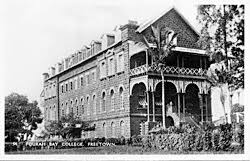
The continued invocation of “Athens of West Africa” in reference to Fourah Bay College is usually framed as a celebration of intellectual primacy: an institution of higher learning emerging at a moment when, it is claimed, there were no comparable centres in so‑called “black Africa.” Within celebratory institutional histories, the epithet functions as shorthand for academic excellence, civilisational achievement, and African participation in a global republic of letters. Yet this sobriquet is not innocent. It is a metaphor saturated with history, and that history is inseparable from chattel slavery.
Fourah Bay College did not emerge outside the Atlantic world; it emerged from it. Its founding conditions were shaped by the afterlives of slavery and the slave trade: liberated Africans, missionary capital, imperial governance, and racialised hierarchies of knowledge. The institution was embedded in an epistemic order that sought simultaneously to redeem, discipline, and re‑make formerly enslaved populations. To call it “Athens” is therefore not merely to invoke learning or philosophy; it is to import an entire civilisational symbol whose material foundations rested on unfree labour. An Africanist text published in 2003—The Athens of West Africa: A History of International Education at Fourah Bay College, Freetown, Sierra Leone—completely skirts the issue.
Classical Athens was a quintessential slave society. Its “democracy”, leisure, philosophy, and intellectual surplus were made possible by enslaved labour—by people excluded from citizenship, voice, and recognition. The surplus that sustained Plato’s Academy and Aristotle’s Lyceum did not arise from abstraction; it was produced. Slaves made Athens thinkable. To abstract “Athens” from slavery is itself a form of historical violence, one that detaches ideas from the material condition that enabled them.
This historical elision becomes especially troubling in the context of contemporary calls for decolonisation. Decolonisation is frequently invoked as a project of curricular reform, symbolic redress, or epistemic inclusion. Yet if decolonisation is to be taken seriously as an epistemological practice, it must also interrogate the metaphors through which knowledge is authorised and legitimised. Symbols matter because they structure what can be imagined, valued, and defended as “knowledge.”
Within this frame, the epithet “Athens of West Africa” performs a subtle but powerful epistemic function. It establishes classical Europe as the horizon against which African intellectual achievement becomes legible. African excellence is recognised not on its own terms, but through analogy to a European slave society elevated as universal civilisation. In this sense, the metaphor reproduces a colonial grammar of value even as it purports to celebrate African achievement.
The problem, then, is not simply Eurocentrism. It is the unconscious valorisation of slavery as the precondition of intellectual greatness. Athens is admired precisely because it is imagined as the cradle of philosophy, “democracy”, and reason—while the enslaved labour that made such achievements possible is rendered secondary or invisible. When this symbol is appropriated to describe West Africa’s premier institution of higher learning, the violence of that erasure is quietly reproduced.
This is a form of epistemic violence. It operates not through coercion but through normalisation. By naming Fourah Bay College “Athens,” one endorses a civilisational template in which knowledge flourishes only when others are rendered disposable. The descendants of the enslaved are invited to celebrate themselves through the symbolic capital of a slave society, even as the labour of enslaved people—both in classical antiquity and in the Atlantic world—is displaced from the story.
A decolonial epistemology would insist on a different reading/point of departure. Rather than seeking validation through classical analogy, it would ask how knowledge was actually produced in places like Freetown, and before that, Fez; Timbuktu; Gao; Jenne; Kano; Katsina; and Kanem-Borno. It would foreground Islamic scholarship, Christian vernacular literacies, sermon traditions, petitions, memorial tablets, schools, mosques, and everyday intellectual labour undertaken by formerly enslaved people. These practices constituted intellectual life long before they were rendered legible through European comparison.
Such a reframing also requires attention to power. Epistemology is never neutral; it is bound up with authority, hierarchy, and exclusion. Colonial education systems did not simply transmit knowledge; they ranked it, classifying some forms as universal and others as particular or derivative. The metaphor of Athens participates in this classificatory violence by placing African knowledge in a position of belatedness, forever aspiring to an already canonised European past.
Decolonisation, understood as practice rather than slogan, therefore demands epistemic reflexivity. It requires institutions to examine not only their curricula but also their self-descriptions, commemorations, and metaphors. What kinds of histories are being authorised? Whose labour is being remembered, and whose is being forgotten? Without this reflexive labour, decolonisation risks becoming a performative gesture that leaves deeper structures of valuation intact.
There is also an ethical dimension to this reckoning. If knowledge production is inseparable from social relations, then celebrating intellectual traditions without confronting the violence that sustained them risks moral evasion. A decolonial ethic would insist on holding together achievement and exploitation, refusing narratives of greatness that depend on forgetting those rendered unfree. This ethical insistence is central to any serious rethinking of epistemic justice.
From this perspective, the question is not whether Fourah Bay College deserves admiration. It is whether its intellectual history must be narrated through a metaphor that reinscribes colonial hierarchies of value. Why must African higher education be intelligible through Athens at all? Why is classical antiquity the benchmark, rather than the Atlantic and Sudanic worlds that actually shaped the institution’s intellectual ecology?
To continue invoking “Athens of West Africa” is therefore not merely to honour history; it is to misrecognise it. It sanitises the violence that underwrote classical civilisation, displaces the labour of the enslaved, and forecloses more grounded accounts of African intellectual production. In doing so, it limits the horizons of decolonisation by retaining colonial symbols at the level of metaphor.
If decolonisation is to be more than a slogan, it must extend beyond curriculum and representation to the deeper structures of epistemic validation. It must ask not only what is taught, but how institutions imagine themselves and the histories they claim. This requires an uncomfortable reckoning with cherished symbols, especially those that quietly normalise slavery as the condition of possibility for knowledge.
In that sense, the question is unavoidable: can an institution born from the aftermath of Atlantic slavery afford to celebrate itself through the emblem of a slave society without reproducing the very epistemic violence it claims to overcome? To ask this question is not to diminish Fourah Bay College, but to take seriously the intellectual and ethical demands of decolonisation itself. Here the irony runs deep: the descendants of the enslaved are invited to celebrate themselves through the symbolic capital of a quintessential slave society. La, c’est de la violence imperialist, tout court!
Ibrahim Abdullah/Fourah Bay College/Mount Aureol/Freetown (An international conference— Bi-Centenary of Fourah Bay College: Reclaiming the Past and Reimagining the Future of Higher Education)