
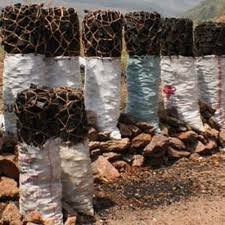
In the hills of Sierra Leone, 65-year-old Pa Alimamy has burned charcoal for over twenty years. For him, the work means survival. “My entire family relies on it,” he said. His story reflects the struggle of thousands across the country. Charcoal remains a key source of income and energy, even as it takes a heavy toll on health, the environment, and the nation’s future.
Across Sierra Leone, charcoal dominates as the main cooking fuel. In Freetown and many towns, few households use electricity or gas. The National Energy Compact, supported by the World Bank, shows that only 36 percent of the population has access to electricity, while clean cooking access stands at 15 percent. The Compact aims to raise electricity access to 78 percent by 2026, adding 180 megawatts of renewable power. But for many, including Pa Alimamy, these goals feel distant as they struggle to meet daily needs.
Charcoal production depends on felling trees. The process strips the land bare and releases harmful emissions. The Environmental Protection Agency warns that even fruit-bearing trees are now being cut, leaving the land vulnerable to erosion and climate shocks. Communities in Port Loko and Bombali districts report worsening deforestation linked to charcoal production. This not only destroys habitats but also threatens food security and rainfall patterns.
EPA Director Paul Lamin explained: “Charcoal burning deforests the land. The trees cut take long to grow, and these trees help reduce carbon in the air.” He added that the lack of alternative energy forces many into harmful practices.
Charcoal burning carries severe health risks. Producers suffer burns, cuts, and smoke exposure that lead to chronic respiratory diseases. Studies in Marampa Chiefdom found that 75 percent of workers experience injuries or smoke-related illnesses. Long exposure to fumes increases the risk of tuberculosis, COPD, and cancer.
For users, indoor pollution from charcoal stoves far exceeds WHO safety limits. Children often develop respiratory infections, and women—who do most of the cooking—face hypertension, stroke, and pregnancy complications. Globally, charcoal and other biomass fuels cause about 1.5 million deaths each year, with Sub-Saharan Africa hit hardest.
The Food and Agriculture Organization estimates that traditional wood energy emits up to 2.4 gigatonnes of carbon dioxide equivalent annually. Sub-Saharan Africa contributes a third of this figure. Although Sierra Leone’s total emissions are low, wood energy remains a major source of its greenhouse gases. Without change, rising charcoal demand will worsen climate impacts and reduce future wood supplies.
While Sierra Leone has no nationwide ban on charcoal use, the 2022 EPA Act empowers local Chiefdom Environment Committees to enforce bylaws. These rules aim to control tree cutting, prohibit felling fruit trees, and require reforestation by registered charcoal burners. “People will continue to burn charcoal, but in a controlled way,” said Lamin. “The committees know the land and the people best and can ensure compliance.”
The main barrier to cleaner energy is affordability. A 12kg gas cylinder costs around USD 34, far beyond what most families can pay. As a result, charcoal remains the only viable option for many. At the ECOWAS Sustainable Energy Forum in 2025, Dr Kandeh Yumkella called for a regional push toward clean cooking. He urged governments and partners to scale up affordable technologies and strengthen carbon finance mechanisms.
Under the Mission 300 Energy Compact, Sierra Leone plans to expand renewable energy generation and improve electricity distribution. Yet, as Director Lamin admitted, these are long-term goals. “You cannot ban charcoal without providing alternatives.”
For people like Aminata Koroma, a 35-year-old charcoal trader, survival outweighs sustainability. “Without coal, we cannot cook,” she said. “Gas is too expensive.” Her words capture the central dilemma: how to protect livelihoods while preserving the environment.
The future depends on bridging that gap. Greening the charcoal value chain, enforcing community bylaws, and scaling access to clean energy can move Sierra Leone toward a fairer, healthier, and more sustainable path—one where survival does not come at the cost of the land and air everyone depends on.