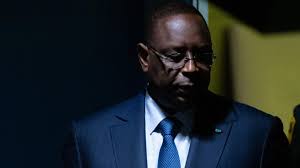
As President of Senegal, Macky Sall sought to hold on to power beyond his constitutional mandate, triggering a constitutional crisis that nearly shattered his country’s hard-earned democratic reputation and left dozens dead in the streets. Today, that same man is campaigning for the highest office in global governance: Secretary-General of the United Nations.
Nominated by Burundi in its capacity as African Union chair, Sall’s candidacy is not only procedurally flawed but morally indefensible. For the sake of Africa’s credibility on the world stage, both Sall and Burundi must immediately withdraw this ill-advised bid.
Let us be clear about the record. Senegal has long been celebrated as one of West Africa’s most stable democracies. Yet under Sall’s watch from 2012 to 2024, that reputation frayed. In 2023, widespread protests erupted after opposition leader Ousmane Sonko was convicted on charges many viewed as politically motivated.
Demonstrators took to the streets demanding clarity on whether Sall, who had himself championed a 2016 constitutional referendum limiting presidents to two consecutive five-year terms, would seek a controversial third mandate. The government’s response was brutal: at least 16 people were killed in June 2023 alone, according to official figures, with independent tallies from Amnesty International and opposition sources putting the number closer to 24–30. Hundreds more were arrested.
The crisis peaked in February 2024. Just hours before the presidential campaign was due to begin, Sall unilaterally postponed the election, citing alleged irregularities in the candidate vetting process. The move was widely condemned as a “constitutional coup.” When the National Assembly, after security forces forcibly removed opposition lawmakers, voted to delay the poll until December, Sall effectively extended his own term by months. Protests erupted across Dakar, Saint-Louis, Ziguinchor and other cities. Security forces responded with live ammunition, tear gas and rubber bullets. At least three more people were killed, scores injured, and over 270 arrested in a matter of days. Internet access was shut down, independent media licences revoked. The Constitutional Council eventually stepped in to restore the electoral timetable, and Senegal’s democracy ultimately prevailed with the landslide election of President Bassirou Diomaye Faye. But the damage to trust was done.
Between 2021 and 2024, credible human rights reports document at least 65 deaths linked to political unrest under Sall’s administration, the vast majority from security forces or state-backed militias. Opposition figures were jailed, journalists harassed, and civic space constricted. Senegal’s global democracy rankings slipped. This is not the résumé of a man fit to lead the United Nations, an organisation whose Charter explicitly upholds respect for human rights, the rule of law, and democratic governance.
Worse still, the manner of Sall’s nomination reeks of backroom manoeuvring rather than continental consensus. On 2 March 2026, Burundi’s Permanent Mission to the UN submitted his name, without prior consultation through the African Union’s established candidatures process. When the AU Commission later tried to ram through a draft endorsement via a rushed 24-hour “silence procedure,” 20 member states broke silence and objected. The proposal collapsed. Senegal’s own current government, under President Faye, has formally distanced itself in a diplomatic note, stating it “at no stage” supported or participated in the initiative. Dakar made it crystal clear. Senegal is not behind this candidacy.
This is not how Africa should present itself to the world. The UN Secretary-General must be a bridge-builder, a defender of multilateralism, and above all a champion of the very principles many African nations have fought to entrench: term limits, peaceful power transitions, and accountability. How can Sall credibly call for global governance reform when his final years in office were defined by attempts to subvert those same norms at home? How can Burundi, as AU chair, claim to speak for 1.4 billion Africans when it bypassed the Union’s own rules and ignored the objections of nearly a third of its members?
Critics in Senegal have already voiced what many across the continent quietly think: that this UN bid looks less like public service and more like a convenient escape hatch from domestic scrutiny. Investigations into political violence, fiscal mismanagement and alleged illicit enrichment during Sall’s presidency are ongoing. Placing him at the helm of the UN would send a dangerous signal that African leaders who erode democracy at home can still claim the continent’s highest international honours.
Africa deserves better. We have no shortage of distinguished statesmen and stateswomen whose records reflect the democratic values and integrity the AU itself promotes in Agenda 2063. The UN selection process is still in its early stages. There is time, and there is a duty, to put forward a candidate who unites rather than divides the continent.
Macky Sall has every right to retire with dignity after a long political career. But seeking the UN’s top job while carrying the baggage of power-grabbing and repression is a bridge too far. Burundi, as current AU chair, has a responsibility to uphold the Union’s credibility, not undermine it through unilateralism.
It is time for both to do the honourable thing and withdraw Macky Sall’s candidacy immediately. Africa’s voice at the United Nations must be principled, not tarnished by the very democratic deficits we urge the world to help us overcome. The eyes of the continent and the world are watching. Let us choose unity, integrity and progress over personal ambition.