
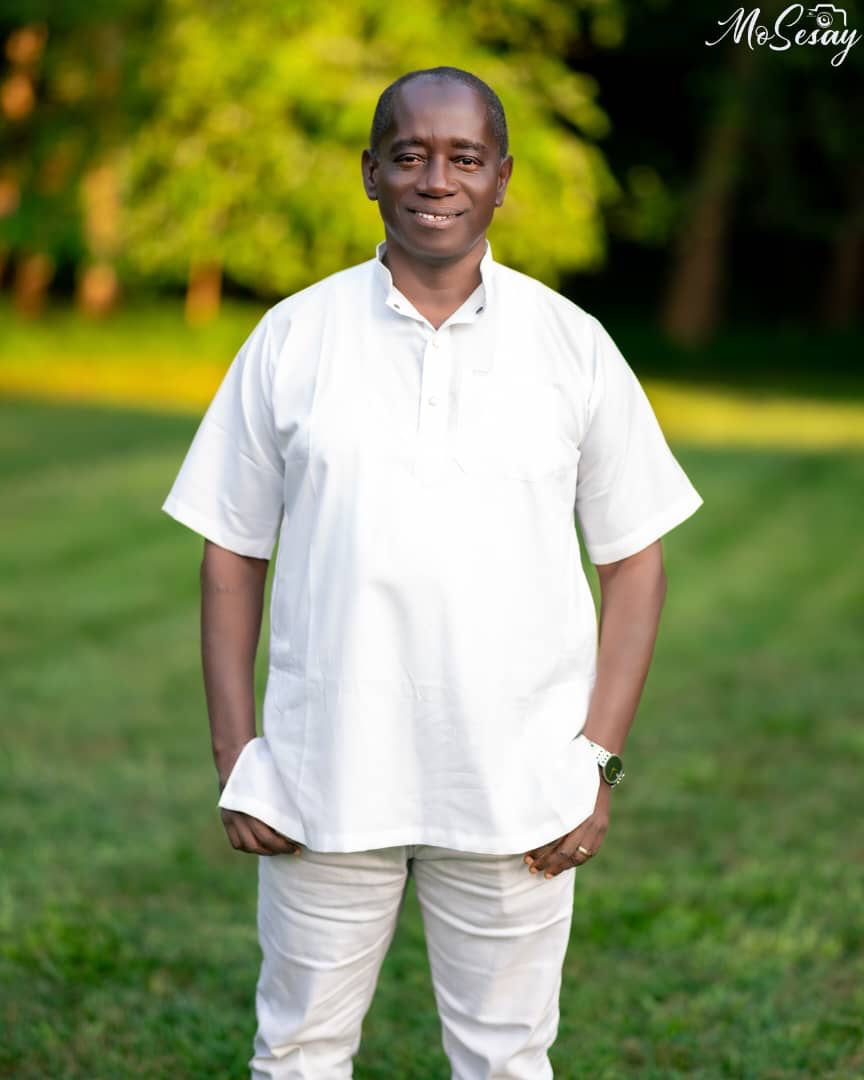
In the heart of Sierra Leone’s literary landscape stands Oumar Farouk Sesay, a poet, playwright, novelist, journalist, and the President of PEN Sierra Leone. His words, forged in the fires of civil war and tempered by decades of social commentary, continue to resonate as calls for justice, healing, and national rebirth.
In an exclusive interview with Sierra Eye, Sesay reflects on his journey from theater stages to poetic verses, the enduring challenges facing his homeland, and the transformative power of poetry. Through his candid responses, he paints a vivid portrait of a nation grappling with its past while yearning for a harmonious future.
From Stage to Poetry
Sesay’s first taste of poetry came early. “When I was in Form Three, a senior prefect asked us to submit poems for the school magazine,” he recalls. “It was never published, but he told me he liked my work. That was the first spark of poetry in my life.”
His focus later shifted to theatre. In the country’s “golden age” of performance, he wrote plays for the Bai Bureh Theatre. Then war arrived, and poetry became his refuge. “During the early days of the war, we formed the Falui Poetry Society—a sanctuary for words and ideas amid the chaos,” he says. “It was there my voice began to take shape.”
When poet Syl Cheney-Coker praised his work, Sesay realised poetry could “heal the soul as much as it expresses it.”
Writing What He Feels
Living in Sierra Leone and abroad, including the United States, widened his view of race, resilience, and identity. “My writing springs from the point where memory, intuition, imagination, and perception meet,” he explains. “Wherever I go, those landscapes continue to shape my poetry.”
He calls his approach instinctive. “Creative ideas come like floodwaters—restless and impossible to contain,” he says. “I write wherever the impulse strikes.”
He recalls one moment after the war that defined this habit. “On my way to inspect a reconstruction site, I saw a funeral procession in a small village. The mourners carried the body through thick mud. That image stayed with me.” It became the seed for one of his most well-known poems.
But his greatest challenge, he admits, is repetition. “We keep writing about injustice and poverty. Decades pass, yet the wounds remain open. That repetition wears you down.”
Poetry with a Duty
Sesay sees poetry as social conscience. “Poetry should not exist only for itself,” he says. “It must serve a purpose rooted in the soil that gives it birth. We must raise the red flag when silence becomes complicity.”
His recent works, A Letter to My Compatriots and Osusu of Sorrow, speak directly to Sierra Leone’s apathy and corruption. “Writers cannot remain indifferent,” he insists. “Our duty is to warn when danger fills the air.”
Listening to the Land
In The Song of Every Land, Sesay urges Sierra Leoneans to rediscover harmony. “Every landscape has its own soul, its rhythms and its silences,” he says. “When we stop listening, the spirit of the land becomes unsettled.”
He believes the country is still searching for a collective rhythm. “We are divided by dialects but united by the same ancestral beat. We must learn to listen again, to our land and to one another.”
Power and the People
Sesay often writes about leadership and accountability. In A Letter from Sorie Public to the President, he warns citizens not to surrender their dignity. “We forget that leaders exist because of us,” he says. “We are the sovereigns; they are our servants. When reverence replaces accountability, societies lose their moral compass.”
He applies the same scrutiny to national politics. In Koko Ros and the Erosion of National Decorum, he condemns how politicians blur party and state. “Treating parliament as an extension of party spaces undermines national unity,” he explains. “Parties can roast their ‘Kokos’ elsewhere, not in the nation’s house.”
Remembering Before History Repeats
Memory is central to Sesay’s work. His piece August 14th Remembered reflects on the 2017 mudslide tragedy. “Our refusal to learn from the past invites history to return in familiar form,” he says. “My writing clings to memory not only as recollection but as resistance to forgetting.”
He also links Sierra Leone’s story to struggles abroad. “Humanity is uniform,” he says. “Any form of injustice should concern everyone. The suffering in Gaza is not different from what we lived through in the war.”
Giving Voice to the Marginalised
Many of Sesay’s poems echo the pain of the poor. “My poetry leans toward the cries of peasants and the deprived in the cities,” he says. “Those voices have been silenced for too long. Their music stays in my chest. No silence can erase it.”
Poetry as Healing
Sesay believes poetry’s value lies in its humanity. “Poetry gives language to emotions too complex for plain speech,” he says. “It builds empathy and helps us heal together.”
He rejects the idea that poetry belongs only in classrooms. “To confine poetry within academic walls is to diminish its power. Across Africa, poets are bringing poetry from page to stage, turning it into testimony.”
He recalls how peace scholar John Paul Lederach featured his work in When Blood and Bones Cry Out, and how a poem by the Falui Society became the first “witness” read in Sierra Leone’s Special Court. “That moment proved that poetry speaks truth before evidence does,” he says.
Teaching and Legacy
Sesay’s poem The Song of the Women of My Land now appears in school syllabi. “That is a dream come true,” he says. “I hope students don’t stop at studying the poem. I hope it moves them to write their own.”
Beyond Borders
Today, Sesay writes for a global audience. “My poetry has travelled beyond Sierra Leone,” he says. “It has been translated into German and Spanish and shared across continents.”
Upcoming works include When My Pen Pours Poetry, There Was an Eden, Labbaik – A Pilgrim’s Verse from Scalp to Soul, and Silences We Carry. Each explores how faith, environment, and memory shape humanity.
He ends with gratitude. “I thank Sierra Eye for giving writers a platform,” he says. “In a world full of noise, poetry remains Sierra Leone’s song of hope.”