By Stephen T. Fomba
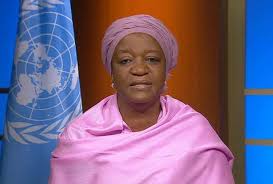
Sierra Leone’s “Iron Lady,” Zainab Hawa Bangura, a lifelong social activist and United Nations executive, won the hearts of Sierra Leoneans once again for her recommendations of progressive ideas for the development of her native country. Her interview on Truth Media Radio was one of her most notable and impactful. Two recommendations she proffered to Sierra Leoneans called for the political and elite classes to consider holding a dialogue on the needs of the citizens and agree to work towards meeting them, regardless of which political party is in office, and for the parties in opposition to monitor and raise concerns when a ruling party deviates from the agreed national plan. The other recommendation challenged Sierra Leoneans to discuss the question, “What country do they want Sierra Leone to be?” Many Sierra Leone progressives refer to Mrs. Bangura as the best president their country never had.
Zainab Bangura’s suggestions come about a quarter-century after Sierra Leoneans had agreed to do just what she recommended for her nation. The year was 2001. The late Ahmad Tejan Kabbah was the president. Sierra Leone was coming from a decade-long bitter civil war. Over 50,000 people were killed. Millions of Sierra Leoneans were either internally displaced persons or refugees. The nation’s infrastructure was dilapidated. Sierra Leoneans were happy to have peace but were consumed by sorrow, fear, hopelessness, ethno-regional divisions, and poverty. There were political tensions, especially between the Sierra Leone People’s Party (SLPP) and the All People’s Congress (APC).
The economy was severely weakened. Sierra Leone was a failing state, and its future was uncertain.
As Sierra Leone stood at the edge of peace after the devastating civil war, the nation agreed to a bold initiative that was both rare and profound under the leadership of President Kabbah. The people of Sierra Leone came together to dream and envision the future they wanted for themselves and their children. That unprecedented collective reflection produced Vision 2025, Sierra Leone’s first comprehensive long-term national development plan with the goals of building a United People, Progressive Nation, and Attractive Country. Vision 2025 was more than a government document; it was a national promise to address the issues affecting Sierra Leoneans and an answer to the question, “What kind of country do we want to build?”
Twenty-five years later, Vision 2025 seemed to have faded from public memory due to a lack of continuity in governance and competing partisan interests. Nevertheless, the ideas of that forward-looking national plan remain relevant. At a time when Sierra Leoneans are again being encouraged to engage in a national dialogue to define a tailored development path that works for them, Vision 2025 offers both a foundation for the required conversation and a lesson to guide the process. The Kabbah-led national plan is a reminder that the recommended conversation for a national dialogue to produce a development blueprint had already begun and must now be renewed.
Championed by a visionary leader, President Ahmad Tejan Kabbah, and shaped and supported by the people of Sierra Leone, Vision 2025 was produced by the National Long-Term Perspective Studies (NLTPS). The primary purpose of that national plan was to articulate a 25-year development vision that would guide Sierra Leone from post-conflict recovery to political stability, economic prosperity, and social cohesion by year 2025.
Through the contributions of citizens from all walks of life, Vision 2025 described a future Sierra Leone that would be peaceful, stable, and united; politically well governed, democratic, and accountable; economically diversified and private sector-driven; socially inclusive, with prioritized investments in education, health, and human development; and environmentally sustainable and resilient. Vision 2025 was a national framework intentionally designed to go beyond political cycles and provide continuity across successive governments. The idea of that plan was that development is a long journey, and Sierra Leone must agree on its destination and commit to it if it hopes to arrive there. This simple but powerful notion is exactly what Zainab Bangura recommended Sierra Leoneans do.
The transformative roadmap of Vision 2025 was developed at a moment of national reckoning; a time when the country and its people were at a crossroads. The civil war had exposed deep
structural weaknesses in Sierra Leone’s political and socioeconomic sectors, including poor governance, exclusions based on ethno-regional identities, youth marginalization, rural neglect, weak institutions, and unsustainable economic models.
The architects of Vision 2025 understood that quick-fix development schemes, such as reconstructing roads and buildings, would be insufficient to secure a prosperous and sustainable future for the nation. Instead, they recognized that rebuilding public trust between citizens and the government was critical for national progress. The Kabbah Administration and the people emphasized the need for strong, independent institutions capable of delivering equitable services to all Sierra Leoneans and fostering a shared sense of purpose.
A thorough review of Vision 2025 revealed three motivations that drove the creation of that forward-looking national plan. The purpose of the plan was to break the cycle of short-termism. Before the war and the development of Vision 2025, development planning was mostly patchy and reactive. The plan was drafted to replace the archaic practice of ad hoc policymaking with a long-term national compass that would guide budgets, reforms, and investments over a set period. Its second goal was to anchor peace firmly in development. As emphasized by President Kabbah, peace was not just the absence of war but also the presence of opportunity, justice, and inclusion. Thus, Vision 2025 unequivocally linked national security to youth employment, balanced growth, and good governance.
Finally, the progressive Vision 2025 strived to give Sierra Leoneans ownership of their future; hence, the process that produced Vision 2025 was participatory by design. Citizens from all backgrounds, traditional leaders, professionals from various sectors, civil society organizations, and the diaspora contributed ideas and aspirations to produce a vision that reflected what Sierra Leoneans wanted. These motivating factors meant that Vision 2025 was an early form of national dialogue.
Despite the progressive ideas outlined in Vision 2025, its promises failed to manifest because the governments after the Kabbah Administration did not take an interest in implementing the plan, and the people forgot about it. From President Ernest Bai Koroma to the government of President Julius Maada Bio, each government has introduced its own development agendas, flagship programs, and medium-term plans. By chance, some elements of Vision 2025 were reflected in the Koroma and Bio initiatives, but many others did not.
The critical gap following President Kabbah’s tenure was the absence of explicit continuity in using Vision 2025 as the overarching national development framework for policymaking, budgeting, and performance evaluation. As a result, most Sierra Leoneans today are not aware that Vision 2025 even exists. Subsequent development planning has been episodic, politically influenced, and disconnected from a shared long-term vision. This unexpected outcome is not a failure of Vision 2025 as a concept, but rather a failure by successive governments to institutionalize and safeguard the vision against political turnover.
Today, Sierra Leoneans are joining Zainab Bangura in renewing the discussion about the need for a national dialogue to answer fundamental questions about the country’s future, especially to answer the question What country do Sierra Leoneans want? As important as the call made by Madam Bangura and other Sierra Leoneans is in this period, it is not a new question. Vision 2025 asked that very question and facilitated the engagement of Sierra Leoneans a quarter of a century ago.
Vision 2025 captured a broad consensus on peace, governance, inclusion, and opportunity that remains valid. However, making the call for dialogue now is pivotal to Sierra Leone’s progress and should be accepted as both a continuation and a corrective. That national plan represents a continuation of collective aspirations, having been shaped through broad consultation, thoughtful reflection, and a collective aspiration. Reviving it today would reaffirm and honor that deeply patriotic, participatory spirit. Vision 2025 is a corrective because it was never fully owned, reviewed, or renewed by successive governments and generations.
Any new national dialogue must acknowledge that the context has evolved significantly, shaped by emerging climate risks, rapid technological advancements, shifting demographics, and dynamic global economic trends. Although Vision 2025 is recommended as a starting point, a plan written two and a half decades ago cannot be implemented without updating it. Therefore, a national dialogue should start by asking the questions: What did Vision 2025 get right? What did the plan miss? What remains unfinished? How could Sierra Leoneans implement such a plan?
Sierra Leoneans need to undergo deep reflection as Vision 2025 reaches its symbolic endpoint without the full implementation of its goals at a time when Sierra Leoneans are renewing their call for national dialogue to define the country they want. The dialogue process should assess achievements, build on the 2001 national development strategy, and extend from where the Kabbah Administration left off.
Sierra Leone should conduct a formal review of Vision 2025 to assess what was achieved and neglected, and the contributing factors. The assessment exercise should be honest, non-partisan, and educational, with attention on helping citizens understand their own development history. The second step should be the convening of an inclusive national dialogue, with the focus on building on Vision 2025. The recommended dialogue should engage young people who were children or, even, not yet born when the vision was launched in 2001, alongside elders who helped shape it. The conversation must also include postsecondary students, professionals from all sectors, retirees, village elders, market women, commercial transportation operators (okada, kekeh, and poda poda), Ataya Base owners, journalists, social influencers, etc.
The central question for guiding the conversation should remain: What country do Sierra Leoneans want now, and why? The proposed dialogue should conclude with the development of a new long-term vision for a new, better Sierra Leone. The national plan that would be produced from the national dialogue could be named Vision 2050, grounded in the old plan. Vision 2050 should build upon the foundational commitments to good governance, human development, economic diversification, and national unity, while responding to today’s challenges that affect Sierra Leoneans. The new national plan should get the buy-in and implementation commitment of the political parties, religious leaders who guide our spiritual and moral principles, intellectuals and academics who influence our mindsets, and media moguls who impact how information is disseminated and understood.
The Class 6 pupil and SS3 student essay contest winners of Vision 2025 are about 37 years and 43 years old today, respectively. That image should be a sense of urgency for the proposed national dialogue. Sierra Leoneans should understand that a nation without a shared vision risks losing its way and failing the people. Vision 2025 was Sierra Leone’s intentional plan to pursue direction rather than drift. Reflecting on Vision 2025 is not about nostalgia, but rather an act of national responsibility.
The question should no longer be whether Sierra Leone had a development plan because it did. The real question is whether the people of Sierra Leone are prepared to embrace it, discuss it, build on it, and progress together. The proposed national dialogue and plan development project is necessary because, as the late President Ahmad Tejan Kabbah said, “No lasting achievement is possible without a vision, and no vision can become real without action and responsibility.” Sierra Leoneans must take responsible action now to build the country they want and deserve.