
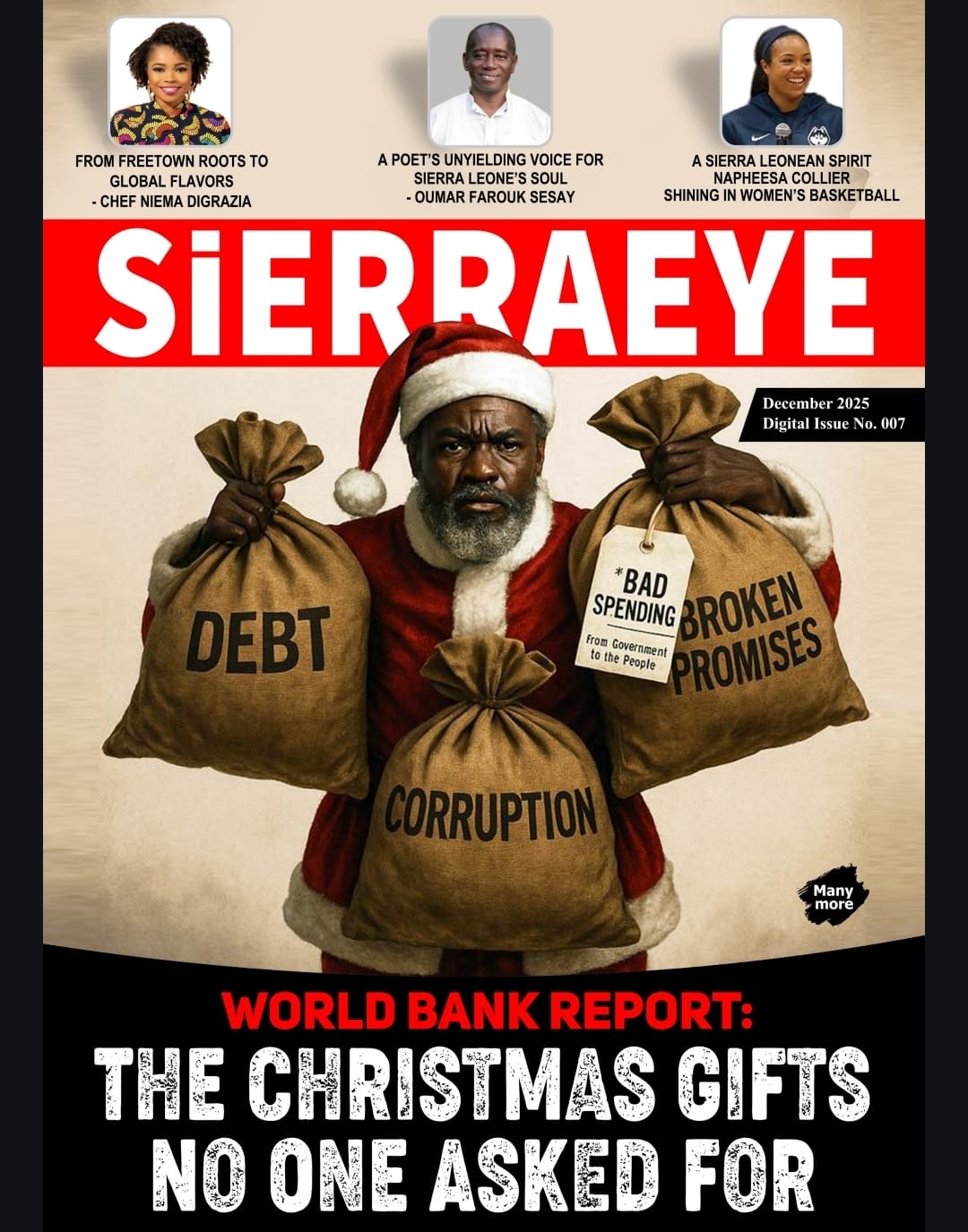
As homes prepare for lights and music, the country receives a harsh reminder of how difficult life has become. The World Bank’s Seventh Economic Update lands in the season of hope. It arrives with facts that cut through the festive mood. The report shows an economy under strain, a state that fails to live within its means and a public weighed down by weak decisions.
The language of the report is measured. The message is not. The country spends more than it earns. Public institutions lack discipline. Waste grows without restraint. Ordinary citizens pay for this disorder through high prices, weak wages and shrinking opportunities. When the diplomatic wording is removed the truth is clear. The system protects privilege, not progress.
THE FIRST GIFT. JOB CREATION THAT FALLS FAR SHORT
The report notes that job creation is a major challenge. The scale is worse than the phrase suggests. The economy provides about 41,000 new jobs each year. The population requires about 75,000 each year to prevent unemployment from rising. The shortfall repeats yearly and builds pressure on families. Youth enter the labour market in large numbers but meet a stagnant system.
A country with a young population needs strong productivity, reliable investment and a private sector that expands. None of these conditions exist. The gap between job needs and job supply reflects deeper weaknesses. These include slow growth, limited credit, unreliable infrastructure and weak investor confidence. Without change this gap will grow wider and feed unrest, migration and social frustration.
THE SECOND GIFT. A DEBT PROBLEM THAT THREATENS STABILITY
The report highlights fiscal vulnerability. This reflects a pattern of overspending, weak controls and a narrow tax base. The government has run deficits for four years. The deficit sits at 5.1 percent of GDP in 2024. This rate is high for an economy with limited revenue and limited access to affordable borrowing.
The state borrows at interest rates above 10 percent. These rates drain funds that should support schools, clinics and local development. Revenue growth remains slow because of exemptions, weak enforcement and a large informal sector. Spending continues to rise in areas that offer limited return. The result is a state trapped between rising interest payments and shrinking investment space.
THE THIRD GIFT. A PRIVATE SECTOR WITHOUT SUPPORT
Private firms shoulder most of the pressure in any developing economy. They produce jobs, goods and tax revenue. The World Bank’s findings show a sector that faces too many barriers. High energy costs, poor electricity reliability, slow regulation, weak land security and short supply of skilled labour all limit growth.
Investors watch these conditions. They adjust their decisions. Many choose to remain small. Others choose to leave.
The country then loses potential revenue and knowledge. Smaller firms cannot expand and cannot absorb the growing labour force. The weaknesses in the business environment then feed the unemployment crisis and slow the rate of innovation.
THE FOURTH GIFT. A SYSTEM THAT ACCEPTS IMPUNITY
The report devotes significant attention to poor public financial management. This includes overspending, weak internal controls, poor procurement practice and a lack of consequences following audit findings. These failures show a culture that tolerates waste and abuse.
The Auditor General’s reports from 2021 to 2023 identify repeated issues across ministries and agencies. These include unsupported payments, irregular contracts, and missing funds. The recovery rate of 1.7 percent confirms that wrongdoers face no pressure to repair damage. Parliament rarely enforces accountability. Other institutions with legal duties remain passive. The outcome is predictable. Waste becomes routine. Theft becomes low risk. Public trust declines.
THE FIFTH GIFT. A CENTRAL BANK CONSTRAINED BY GOVERNMENT HABITS
The report outlines the influence of fiscal decisions on monetary policy. The Central Bank attempted to reduce inflation in 2024 by raising interest rates. This attempt lacked strength because government borrowing and money growth continued. Inflation responds to demand. When the state spends without discipline, price stability becomes harder to maintain.
Base money growth remained high. This shows how much pressure the Central Bank faces from fiscal behaviour. Inflation eased in 2024 and 2025 because global prices cooled. Domestic policy played a limited role. Without a firm budget, interest rate tools lose impact. This weakens confidence in policy and increases risk for investors and savers.
THE SIXTH GIFT. BANKS THAT FAVOUR THE STATE OVER CITIZENS
A healthy economy requires banks that lend to businesses and households. The report shows a different pattern. Banks prefer lending to the government. Government loans carry zero risk under current rules. This gives banks an incentive to lend to the state and ignore the private sector.
Farmers lack capital to expand. Traders lack credit during peak seasons. Firms with ideas struggle to secure loans. The system lacks a strong collateral registry and modern insolvency laws. This leaves banks with uncertainty when dealing with private borrowers. Digital identity systems remain incomplete. This limits the reach of financial services. Mobile money use rises but the overall level of financial inclusion remains low. These conditions hold back growth and job creation.
THE SEVENTH GIFT. SHRINKING RESERVES AND HEAVY FOREIGN SPENDING
Foreign reserves have fallen from 2.6 months of import cover in 2023 to 1.5 months in 2025. This level is far below recommended thresholds. The drop continues despite improved export performance. Debt service payments absorb a large share of foreign currency. Public spending on overseas travel, embassies and energy arrears also drain reserves.
Leaders promote overseas travel as a source of investment. The data in the report challenges this claim. Reserves fall. Import cover weakens. Foreign direct investment remains limited. Households face high prices for imported goods. These trends show that foreign spending priorities are misaligned with national needs.
The timing adds to public concern. The country faces a drug crisis. Youth struggle with addiction. Families face high food costs. Basic services remain weak. Yet foreign travel and diplomatic missions expand. This raises questions about judgment and empathy.
THE EIGHTH GIFT. RISING POVERTY AND AN UNEVEN RECOVERY
The poverty rate has grown from 24 percent before COVID-19 to 32.7 percent in 2024. High inflation reduces purchasing power. Weak job creation limits income. Social protection programmes reach too few households. Food insecurity affects 82 percent of citizens. Many households skip meals or reduce diet quality.
These conditions stem from decisions, not fate. A state that fails to protect revenue and enforce discipline cannot act strongly on poverty. Public money that supports unproductive spending deprives communities of clean water, safe schools and skilled nurses. Poverty then becomes a structural feature rather than a temporary setback.
WHAT THE REPORT DOES NOT ADDRESS
The World Bank avoids any mention of the Kush crisis. This crisis destroys productivity and weakens families. It drains labour capacity and deepens insecurity. Any serious assessment of national performance must confront this issue. The silence reduces the report’s ability to describe the true state of the economy.
The report names Parliament but avoids naming other bodies with responsibilities. The Anti -Corruption Commission has the power to act on audit findings but seldom proceeds with force. When institutions remain silent, accountability weakens. Public resources are then exposed to abuse.
A QUIET VERDICT
The diplomatic tone masks a clear judgment. Public money is misused. Institutions designed to protect the public interest hesitate to act. Leaders prioritise comfort over service. Development partners soften criticism which reduces pressure for reform.
This leaves citizens with a sense of abandonment. They face rising prices, weak services and reduced opportunity. Their struggle rarely appears in external reports unless expressed in numbers.
FINAL WORD
Sierra Leone needs leaders who treat public money with discipline and respect. Without integrity, fairness and accountability the country will continue to receive the same gifts each year. Debt. Hardship. Discontent.