
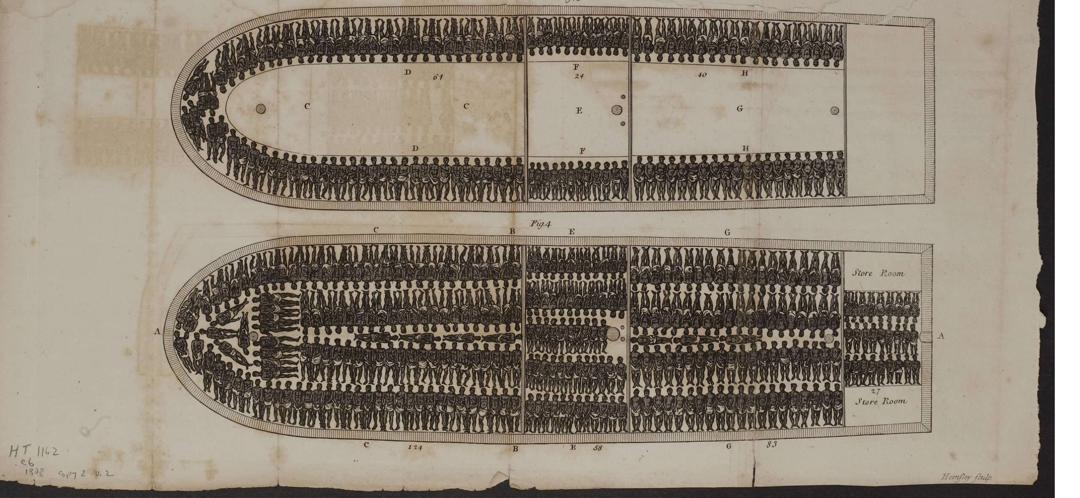
The recent United Nations General Assembly resolution recognizing the transatlantic slave trade as a crime against humanity has laid bare a historical fault line that has never truly been resolved. The voting pattern—opposition from the United States, Israel, and Argentina, and abstention from much of Europe—reveals not hesitation, but implication. These are not neutral actors; they are beneficiaries, direct or indirect, of a world system forged in slavery. Against them stand those whose bodies, lands, and futures were expropriated. Sierra Leone must be read within this stark division—not as a peripheral case, but as a central archive of the transition from slavery to empire and the unfinished business of justice.
The story begins not in 1807, but in the sixteenth century, with figures such as John Hawkins, whose voyages helped inaugurate England’s direct participation in the Atlantic slave trade. These early expeditions were not marginal adventures; they were foundational acts in the emergence of English—and later British—commercial capitalism. Enslaved Africans became commodities, and their forced labor generated immense wealth in the Americas. This wealth did not remain overseas. It flowed back into Europe, financing banking systems, industrialization, and the expansion of global trade networks. Slavery was not an aberration; it was constitutive of the modern capitalist world.
For Africa, the consequences were catastrophic. Entire regions were depopulated, political systems were destabilized, and economic life was reoriented toward external extraction. The concept of “underdevelopment” is not a natural condition; it is a historical product. Africa’s incorporation into the global economy occurred on violently unequal terms, and Sierra Leone would later become one of the sites where these inequalities were reorganized rather than resolved.
The abolition of the British slave trade in 1807 is often presented as a moral rupture. Yet this narrative obscures a deeper continuity. Abolition did not dismantle the structures of accumulation built on slavery; it transformed them. The shift to “legitimate commerce”—the trade in palm oil, peanuts, and other commodities—represented not a break, but an adaptation. It allowed European powers to maintain economic dominance in Africa while preparing the ground for formal colonial rule.
Sierra Leone stands at the heart of this transition. Following abolition, the British Navy intercepted slave ships and resettled close to 100,000 liberated Africans in Freetown. This act has long been celebrated as humanitarian. But to stop at that interpretation is to miss the historical point. These individuals were not returned to their homelands; they were reorganized into a colonial society under British authority. Freetown became a Mini Africa where more than one hundred and fifty African languages were spoken; a site where the human debris of slavery was managed, catalogued, and redeployed.
The emergence of a creolized culture and society is emblematic of this process. It represents both cultural creativity and profound loss. Languages, identities, and kinship systems were irreversibly disrupted. What was created was new—but it was born of violence and displacement. Sierra Leone thus became a laboratory for a new form of imperial governance: one that followed slavery, absorbed its consequences, and extended its logic in different form.
This is the crucial historiographical turning point. The older narrative treated slavery and colonialism as distinct phases: one ending, the other beginning. The more compelling interpretation recognizes them as sequential moments within a single, expanding system of capitalist accumulation. Slavery generated the capital; abolition reorganized the system; colonialism entrenched the inequalities. Sierra Leone is where these transitions are most visible.
By the late nineteenth century, the so-called “legitimate trade” had given way to formal colonial rule across Africa. The same powers that had profited from slavery now imposed political control, restructuring African economies to serve metropolitan needs. Sierra Leone, despite its earlier association with abolition, was fully integrated into this system. Its economy was oriented toward exports; its political institutions were subordinated to imperial authority. The promise of liberation gave way to the reality of dependency.
It is within this longue duree (long history) that the contemporary demand for reparations must be situated. The UN resolution is not simply about recognition; it is about responsibility. The resistance of certain states reflects an unwillingness to confront the material implications of that responsibility. To acknowledge slavery as a crime against humanity is to raise the question of redress.
For Sierra Leone, reparations must be understood in expansive terms. The claim is not limited to the exploitation of enslaved labor elsewhere; it encompasses the forced resettlement of populations, the destruction of cultural continuities, and the imposition of economic structures that have constrained development for generations. The underdevelopment of Sierra Leone is not incidental—it is historically produced.
Reparatory justice, therefore, must operate on multiple levels. It requires the transfer of resources, not as aid but as restitution. It demands investment in infrastructure, education, and institutional capacity tied explicitly to historical accountability. It calls for the reconstruction of historical knowledge, including the tracing of liberated Africans to their origins and the preservation of their stories. And it necessitates structural changes in the global economy that continue to reproduce inequality.
This is not a plea; it is a claim grounded in history. The data are clear: millions enslaved, vast wealth accumulated, enduring disparities entrenched. The moral language of “never again,” so central to other historical tragedies, must be extended here. To invoke that principle while ignoring slavery is to render it hollow.
Sierra Leone stands as both evidence and indictment. It reveals how the end of slavery became the beginning of another form of domination. It shows how the wealth of some nations is inseparable from the impoverishment of others. And it demands that recognition be translated into action.
The UN resolution has opened a door. The question is whether the world is prepared to walk through it. For Sierra Leone, and for Africa more broadly, the stakes are nothing less than the possibility of transforming historical truth into material justice.
Ibrahim Abdullah, Leicester Peak, 25/3/26