
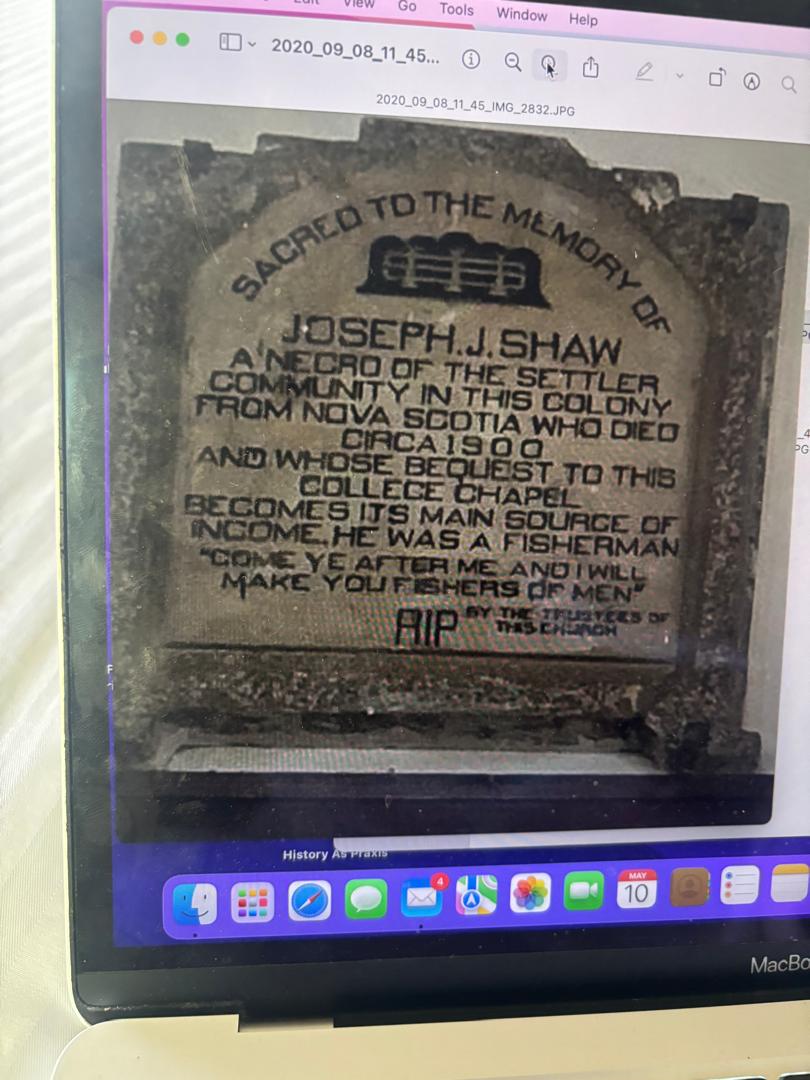
In the late eighteenth century, a restless Atlantic world carried ships, scriptures, rumours, revolutions, and fugitives across imperial frontiers with unsettling speed. Long before historians named it the “Black Atlantic,” enslaved and formerly enslaved Africans already inhabited it as makers of political meaning. They moved through its circulatory networks as soldiers, sailors, preachers, petitioners, refugees, and runaways, carrying with them memories of bondage, evangelical visions of spiritual equality, and an expanding grammar of liberty that no imperial boundary could fully contain. Among the most remarkable of these travellers were the “Black Loyalists” who departed Nova Scotia for Sierra Leone in 1792, seeking in West Africa the freedom the American Revolution had promised but never intended fully to grant them.
Yet the story of the Nova Scotians in Sierra Leone has too often been framed within the paternalist vocabulary of imperial philanthropy: settlers rescued by abolitionists, disciplined by missionaries, and governed into civilisation by the Sierra Leone Company. Such narratives reduce them to objects of reform rather than subjects of history. This article proceeds from a different premise. It seeks to recover the Nova Scotian settlers as historical actors in the deepest Thompsonian sense: men and women who fashioned a political culture from below out of migration, war, religion, betrayal, labour, and struggle. It seeks, in other words, to rescue them from what E. P. Thompson famously called “the enormous condescension of posterity.”
If the archives of early Sierra Leone speak anxiously of “Jacobins,” “rioters,” and “negro Sans Culottes,” they also reveal something more profound: the emergence in Atlantic Freetown of a radical popular politics grounded in claims to liberty, equal rights, land, representation, and non-racial citizenship. The Nova Scotians did not merely transport bodies across the Atlantic; they carried political expectations forged in slavery, sharpened in war, and radicalised through exclusion. Their Methodism provided more than consolation. Like the plebeian Methodism of industrial England analysed by E. P. Thompson, it furnished forms of organisation, literacy, collective discipline, moral legitimacy, and a language of human equality that could sustain agitation from below. Chapel meetings, petitions, dissent, and protest became vehicles through which the settlers transformed evangelical community into democratic practice.
The colonial state recognised the danger immediately. Imperial officials racialised Nova Scotian political action precisely because they understood its implications. William Wilberforce painted the settlers with the brush of Jacobinism; the brash Governor Thomas Perronet Thompson dismissed them contemptuously as “negro Sans Culottes.” Such labels were never descriptive alone. They were attempts to transform Black political agency into racial threat, to render demands for rights unintelligible except as disorder. The passage from “Black Loyalist” to “Black Jacobin” to “negro Sans Culotte” marked the colonial effort to contain a population whose insistence on liberty exceeded the paternal limits of abolitionist empire.
In this respect, the history of the Nova Scotians belongs within the wider revolutionary currents of the Atlantic world explored by Julius Scott in The Common Wind. News, rumours, sermons, and political idioms travelled ceaselessly among sailors, preachers, dockworkers, soldiers, and fugitives, creating subterranean networks of communication that linked Haiti, Nova Scotia, Jamaica, London, Charleston, and Sierra Leone. The settlers of Freetown inhabited precisely this world of circulation. Their radicalism was not derivative mimicry of European revolution but part of a broader Black Atlantic political tradition in which enslaved and formerly enslaved peoples appropriated, transformed, and universalised the language of rights that empires and revolutions sought to reserve for whites alone.
Here the profound paradox identified by Cassandra Pybus in Epic Journeys of Freedom becomes central. In fleeing the American republic whose founding fathers proclaimed liberty while denying their humanity, Black Loyalists carried to the far corners of the globe the animating principles of the Revolution itself. Excluded from the nation, they became among the most determined custodians of its universal promise. What white revolutionaries defended as the privilege of citizens, Black migrants transformed into a claim about humanity. Their journeys across the Atlantic were therefore not acts of exile alone, but acts of political transmission.
To write the history of the Nova Scotian settlers in this way is to shift the centre of gravity in the study of the Black Atlantic. Sierra Leone ceases to appear merely as an abolitionist experiment on the margins of empire and emerges instead as a crucible of popular democratic struggle in the Age of Revolution. The settlers’ petitions, protests, refusals, and insurgent political cultures formed part of a wider genealogy of Atlantic radicalism from below. Their history belongs not to imperial benevolence, but to the heroic tradition of ordinary people who insisted that liberty must be universal or it would remain a lie.
Ibrahim Abdullah, 10/5/26