
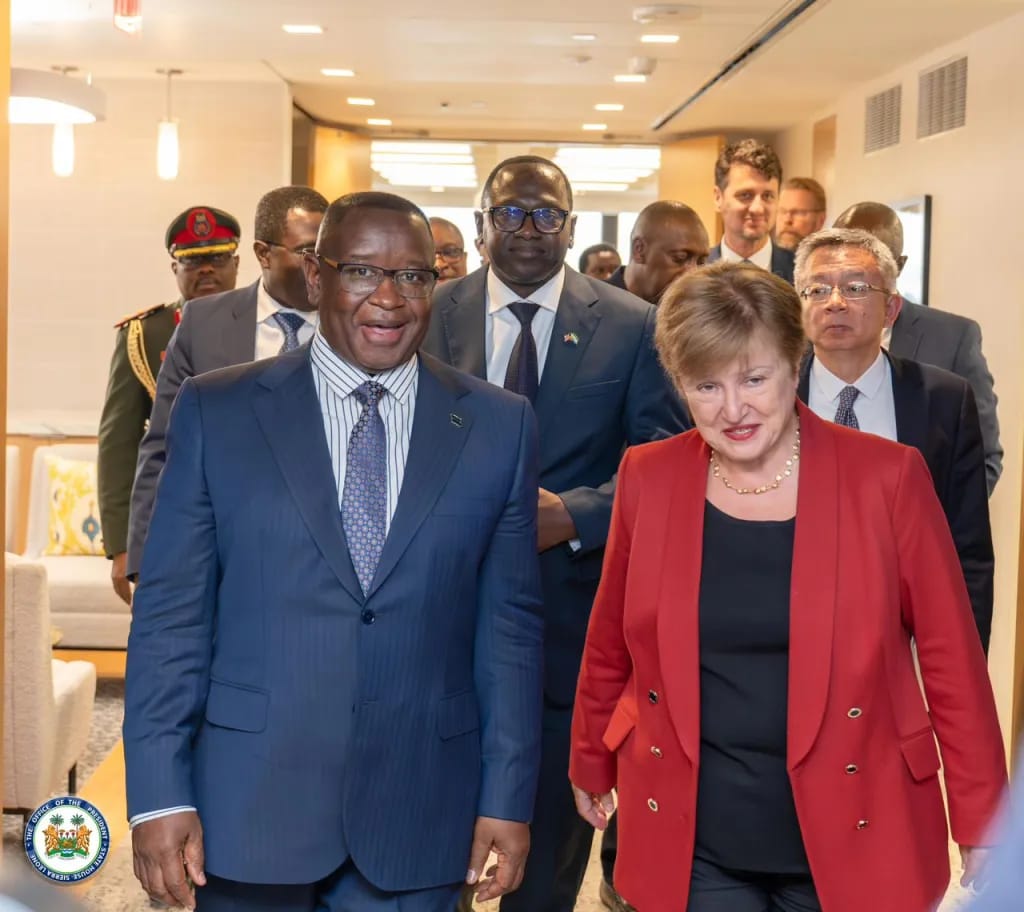
Sierra Leone has made notable progress in stabilising its economy under an International Monetary Fund (IMF)-supported reform programme, but rising global pressures and domestic constraints are presenting new challenges, according to the IMF.
An IMF mission led by Mission Chief Christian Saborowski concluded discussions in early May 2026, announcing a staff-level agreement on the third review of Sierra Leone’s programme under the Extended Credit Facility (ECF), alongside a request for additional support through the Resilience and Sustainability Facility (RSF).
The IMF said policy reforms implemented in recent years have delivered tangible results. Sierra Leone recorded a domestic primary surplus of 1.3 percent of gross domestic product (GDP) in 2025, supported by improved tax collection and controlled public spending.
Combined with tighter monetary policy, these measures have helped stabilise the exchange rate, reduce inflation, lower borrowing costs, and improve access to credit for the private sector.
However, the Fund warned that sustaining this progress is becoming increasingly difficult. Revenue performance during the first months of 2026 has been weaker than expected, while expenditure pressures have intensified. The government is also facing external shocks, including higher global energy and food prices linked to ongoing tensions in the Middle East.
To cushion the impact of rising fuel prices, the government introduced temporary subsidies in April. The IMF said such measures should remain targeted, transparent, and time-bound, while efforts continue to secure donor support for strengthening social safety nets.
Inflation is projected to rise to approximately 11.6 percent by the end of 2026 before declining to single digits in 2027, reflecting persistent global price pressures. The IMF noted that the current monetary policy stance remains appropriate but may require further tightening if inflationary pressures continue.
Economic growth, which strengthened in 2025, is expected to slow to around 4 percent in 2026 due to external headwinds before gradually recovering to about 4.5 percent over the medium term as reforms take hold.
The IMF also highlighted several risks to the outlook, including prolonged global instability, climate-related shocks, reform fatigue, and potential election-related uncertainties.
Looking ahead, the Fund said policy priorities should focus on maintaining fiscal discipline while protecting critical social spending, enhancing domestic revenue mobilisation, and strengthening public financial management. Continued reforms in the financial sector and governance were also identified as key to sustaining economic stability.
The proposed RSF programme is expected to support climate-related reforms, including improved investment planning and stronger resilience to environmental shocks.
According to the IMF, the programme provides a framework for maintaining macroeconomic stability while supporting long-term development and resilience.