
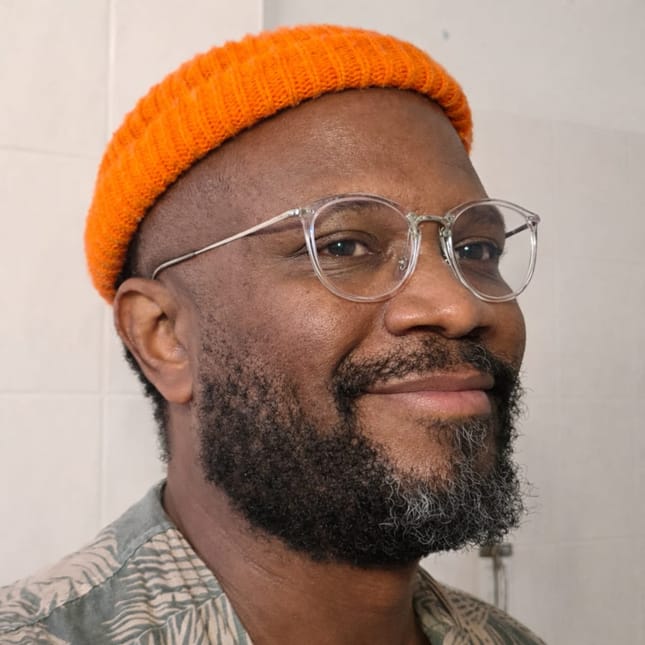
By: Tejan Lamboi is Journalist, Researcher and Diversity Expert based in Berlin
It was well past nightfall when Sierra Leone’s Parliament adjourned debate on the proposed Constitutional Amendment Act, 2025. MPs had spent hours wrestling with one of the most consequential constitutional reform packages since the 1991 Constitution came into force.
Deep into the proceedings, one Member of Parliament captured the mood of the House, describing the biggest issue before Parliament as “the elephant in the room.”
It was not the proposed changes to the National Electoral Commission. Nor was it the constitutional quota for women, the caretaker provisions limiting the powers of an outgoing President, or even the proposal to allow independent presidential candidates.
The real battle was over how Sierra Leone should elect its Members of Parliament.
Should the country retain the familiar First-Past-the-Post constituency system, or should Proportional Representation become the permanent model?
This is far more than a technical constitutional debate. It is about representation, accountability and, ultimately, who holds political power.
When Parliament reconvenes, committees will scrutinise the Bill clause by clause, dotting the i’s and crossing the t’s. But before lawmakers settle the legal text, they should first answer a more fundamental question: Which electoral system best serves Sierra Leone’s democracy?
Supporters of First-Past-the-Post argue that its greatest strength is accountability. Every constituency elects one Member of Parliament, giving citizens a clear representative to praise for delivering or to hold accountable for failing to do so.
Yet Sierra Leone’s political reality often tells a more complicated story.
In many constituencies, particularly traditional party strongholds, the party symbol frequently matters more than the individual carrying it. In places such as Makeni or Kailahun, the outcome is often considered highly predictable long before polling day.
In such circumstances, critics argue that winning the party symbol can become more important than winning over the electorate. The real contest often takes place within political parties rather than at the ballot box.
Supporters of Proportional Representation see the issue differently.
They argue that Parliament should more accurately reflect how citizens vote. Under proportional representation, fewer votes are effectively wasted, smaller political parties have a greater opportunity to gain representation, and parties are generally better placed to promote women, young people and other underrepresented groups. It is no coincidence that the proposed constitutional amendment also entrenches a minimum of 30% women candidates for parliamentary and local council elections.
However, proportional representation has its own critics.
Several MPs argued during the debate that the system gives political parties too much influence because party executives decide who appears on electoral lists. If that process lacks transparency, voters may have little say over who ultimately enters Parliament.
It is a legitimate concern.
But the counterargument is equally persuasive.
Even under the current constituency system, political parties already determine who receives their symbol. Without that nomination, very few candidates stand a realistic chance of becoming MPs. The difference is that proportional representation makes party influence more visible rather than necessarily creating it.
Perhaps the uncomfortable truth is that neither electoral system automatically produces better democracy.
Both depend on transparent elections, accountable institutions and, above all, political parties that practise internally the democratic values they champion publicly.
Another issue that attracted considerable debate was the proposed appointment process for the Chief Electoral Commissioner and members of the National Electoral Commission.
The Bill proposes replacing the existing approach with an independent Search and Nomination Committee comprising representatives from civil society, the Inter-Religious Council, the legal profession, the media, youth, women and the private sector. Supporters argue that such a broad-based process could strengthen public confidence in the independence and credibility of the Electoral Commission. Others questioned whether the new system would genuinely remove politics from the appointment process or simply redistribute political influence among different actors.
That question deserves careful scrutiny because confidence in the Electoral Commission remains central to public trust in elections.
The proposal to allow independent presidential candidates also generated spirited discussion.
Since Members of Parliament from across the political divide appear to agree that allowing independent candidates to contest the presidency is a bad idea, perhaps it is worth asking a different constitutional question.
Should the SLPP and APC have an exclusive gateway to State House, or should every qualified Sierra Leonean who meets clearly defined legal requirements have the opportunity to seek the people’s mandate?
Political parties are the backbone of representative democracy. They organise political competition, develop policy platforms and provide governments with stability. But democracy is also about expanding citizens’ choices, not unnecessarily restricting them.
Whether Sierra Leone ultimately permits independent presidential candidates is a decision for Parliament. However, that decision should be guided not by the interests of today’s political parties, but by the enduring constitutional principle of whether the country’s highest office should remain open to every qualified citizen capable of earning the confidence of the electorate.
Beyond these headline issues, the Constitutional Amendment Act contains several reforms that deserve careful consideration, including limits on the powers of an outgoing President during the transition period, constitutional protection for the political neutrality of the Police and Armed Forces, and clearer rules governing presidential elections and election petitions.
If implemented faithfully, many of these reforms could strengthen public confidence in Sierra Leone’s democratic institutions.
As Parliament now moves into committee stage, Members have an opportunity, and a responsibility, to rise above partisan politics.
This constitutional review should not become another contest between government and opposition. Nor should it be an exercise in scoring political points.
Instead, Parliament should ask a series of enduring questions:
Which electoral system gives citizens the strongest voice? Which model best balances fairness with accountability? How can political parties become more democratic in selecting those who seek public office? And will these reforms strengthen Sierra Leone’s democracy not just for the next election, but for the next generation?
Those are the questions that matter.
History will judge this Parliament not by how loudly it debated these amendments, but by whether it had the wisdom to leave Sierra Leone with a Constitution that is stronger, fairer and more democratic than the one it inherited.
Because constitutions are never written for governments.
They are written for generations.