
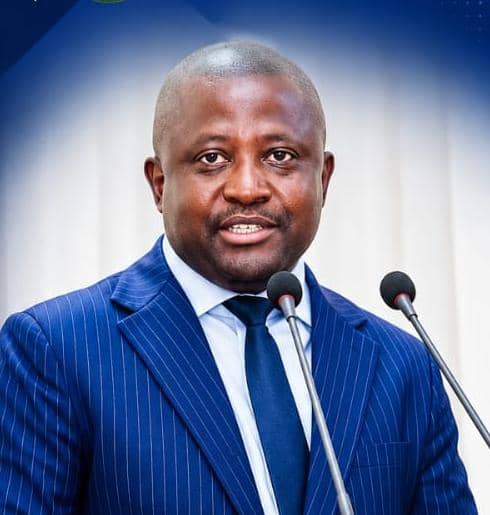
By Edward Dictionary Caulker
The ongoing debate surrounding Sierra Leone’s Constitution of Sierra Leone (Amendment) Bill, 2025, has generated considerable attention across political circles, civil society organisations, women’s groups, and the wider public. Yet beyond the legal language and technical discussions about electoral reform lies a deeper issue that has increasingly dominated parliamentary proceedings: the future of women’s political representation.
For many observers, the conversation appears to centre on whether Sierra Leone should adopt a Proportional Representation (PR) electoral system or maintain the traditional First-Past-the-Post (FPTP) model. However, after nearly fifteen hours of parliamentary debate and extensive submissions from Members of Parliament and stakeholders, it has become evident that the more consequential question is how Sierra Leone intends to protect the gains achieved under the Gender Equality and Women’s Empowerment (GEWE) Act, 2022.
At the centre of that concern is the 30 percent quota for women’s political participation.
This is not a debate that emerged overnight. Sierra Leone’s constitutional reform journey stretches back more than a decade. On 30 July 2013, the Government of President Dr. Ernest Bai Koroma established the Constitutional Review Committee (CRC), chaired by the late Edmond Cowan. The committee was tasked with reviewing the 1991 Constitution and proposing reforms aimed at strengthening democracy, accountability, human rights, governance, and the rule of law.
The CRC’s recommendations, submitted in 2017, laid the foundation for many of the reforms now under consideration. Government officials maintain that the current Constitutional Amendment Bill is also the product of an extensive national consultation process involving over 10,000 consultations, 133 stakeholder engagements, 150 position papers, and approximately 70,000 public response forms collected across the country.
Against that backdrop, Parliament is now confronted with a constitutional question that carries significant political and social implications.
The Attorney-General and Minister of Justice, Alpha Sesay, has argued that the proposed constitutional amendments offer a historic opportunity to transform women’s political participation from a policy objective into a constitutional guarantee.
According to him, the Bill seeks to constitutionally mandate a minimum 30 percent women’s quota in political nominations at both national and local levels.
In his view, the reform would ensure that women’s representation is no longer dependent on political goodwill but is protected by the supreme law of the land.
His argument is straightforward. For decades, women have remained underrepresented in political decision-making despite constituting the majority of the population. Constitutional protection, therefore, would provide a stronger safeguard against future political reversals.
Yet while there appears to be broad support for increasing women’s participation, sharp differences emerge when the discussion turns to the electoral system through which that objective should be achieved.
Hon. Hindolo Gevao of the SLPP strongly defended the Proportional Representation system, arguing that it is both economical and more favourable to women’s participation.
His position reflects international experience. In several countries, proportional representation has helped political parties increase female representation by allowing candidates to be placed on party lists rather than relying entirely on constituency-based contests.
From that perspective, PR appears to offer a practical pathway toward achieving the 30 percent threshold.
However, not everyone in Parliament is convinced.
Hon. Aminata Sesay of the APC raised what may be one of the most important interventions in the entire debate.
She argued that without the GEWE Act, the PR system alone cannot guarantee increased representation for women. More importantly, she insisted that the 30 percent threshold must be protected regardless of whether Sierra Leone adopts PR, retains First-Past-the-Post, or embraces any other electoral model.
Her argument shifts the focus from electoral systems to constitutional protection.
In essence, she suggests that women’s rights should not be tied to the fortunes of a particular electoral arrangement. Instead, they should exist independently and remain protected under any democratic framework the country chooses.
A similar position was advanced by Hon. Osman Timbo of the APC.
While acknowledging the importance of women’s representation, he challenged the notion that proportional representation is the only route to achieving it. He urged Parliament to explore alternative mechanisms capable of protecting female participation without necessarily abandoning other electoral options.
His intervention exposed a fundamental reality often overlooked in the debate.
Electoral systems do not automatically create inclusion.
They can create opportunities, but opportunities alone do not guarantee outcomes.
This distinction matters because the debate is increasingly revealing two competing schools of thought.
One believes that structural reforms such as PR naturally create space for greater inclusion.
The other believes that constitutional guarantees, regardless of electoral design, provide a more reliable safeguard.
Neither position is entirely without merit.
What is clear, however, is that both sides recognise the importance of preserving the progress made under the GEWE Act.
That alone represents a significant shift in Sierra Leone’s political discourse.
Only a few years ago, debates about women’s political participation were often confined to advocacy groups and civil society organisations. Today, they occupy centre stage in constitutional discussions within Parliament itself.
Beyond politics, the implications are far-reaching.
Women’s representation is not simply about numbers in Parliament. It influences policymaking, budget priorities, education, healthcare, child welfare, social protection, and broader governance outcomes.
Research across different democracies has consistently shown that greater female participation in leadership often broadens policy discussions and strengthens attention to issues that directly affect families and communities.
Consequently, the debate unfolding in Parliament is not merely about electoral formulas. It is about how Sierra Leone chooses to define inclusion, representation, and democratic participation for future generations.
At the same time, public perception cannot be ignored.
Many Sierra Leoneans continue to face pressing economic challenges, unemployment, rising living costs, and concerns about service delivery. To some citizens, constitutional debates may appear distant from their daily struggles.
Yet constitutions matter precisely because they shape the institutions responsible for addressing those struggles.
The rules governing representation today influence the quality of leadership and decision-making tomorrow.
As Parliament moves into the committee stage of deliberations, the challenge will be finding common ground between electoral reform and gender inclusion without sacrificing either objective.
The emerging consensus appears to be that women’s representation deserves constitutional protection. The disagreement lies in determining the most effective vehicle for delivering that protection.
Ultimately, Sierra Leone’s constitutional reform process will be judged not by the intensity of parliamentary speeches but by the durability of the solutions it produces.
The debate over Proportional Representation and First-Past-the-Post may dominate headlines today. Yet history may remember this moment less for the electoral system chosen and more for whether Parliament succeeds in securing meaningful and lasting political space for Sierra Leonean women.
That is the real constitutional debate unfolding before the nation.