
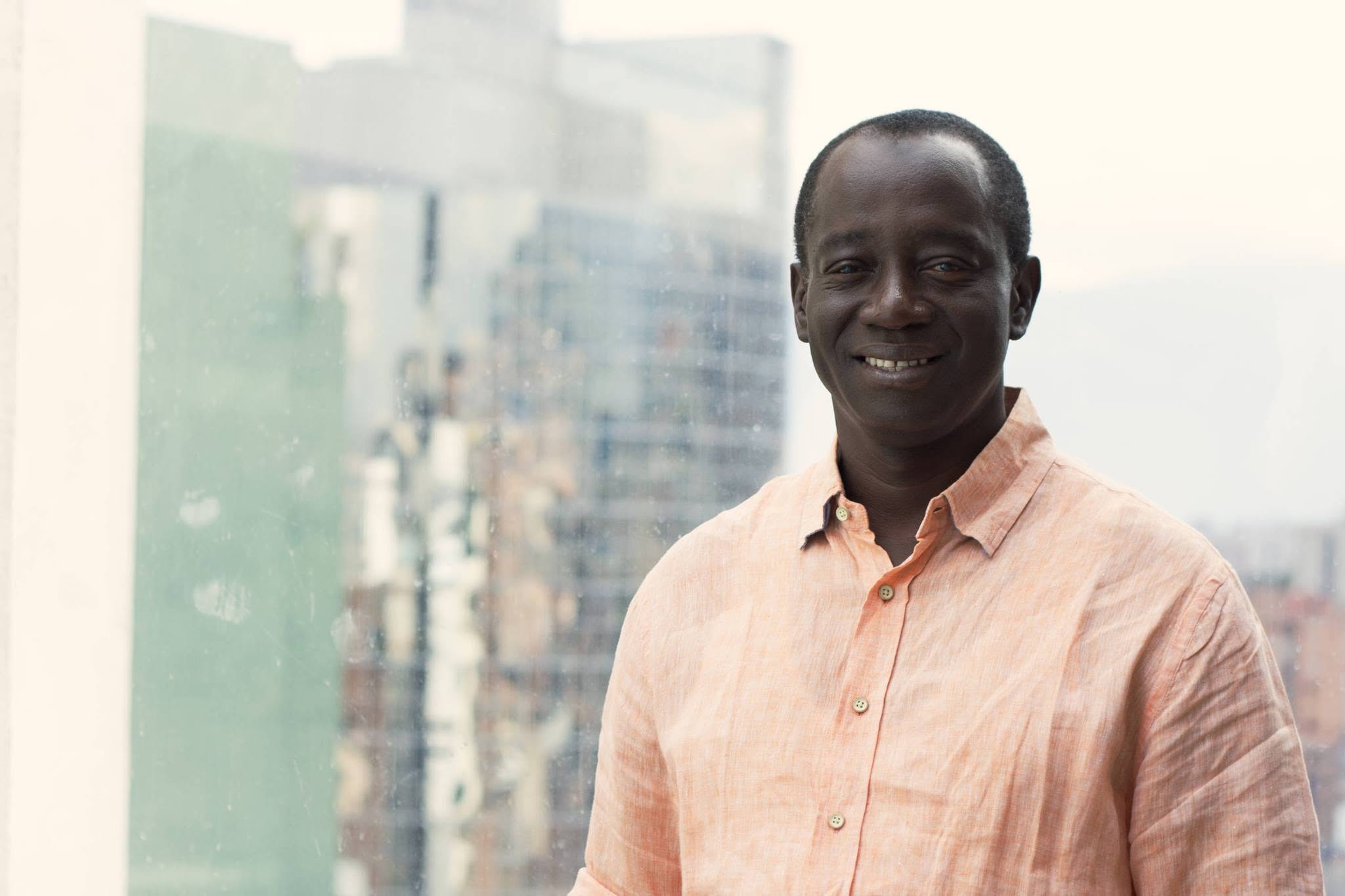
By Oumar Farouk Sesay
Sierra Leone is always ready to amend the Constitution. What we have never devised is a parliamentary procedure or national agenda for amending the conscience of those entrusted with upholding it.
That may be the wound no Constitution can heal.
We first sang of unity, freedom, and justice with the uncertain voices of children, standing beneath the green, white, and blue before we fully understood what it meant to belong to a nation. We learned the anthem’s words long before experience taught us how easily national promises could be recited—and how easily they could be betrayed.
Years later, the anthem still rises in classrooms, at state ceremonies, before football games, and at the opening of Parliament. We stand tall and sing of a country united in purpose.
Then the ceremony ends.
We return to dividing the nation by tribe, region, and party. Institutions are bent toward partisan interests. Loyalty is mistaken for patriotism. Dissent is treated as betrayal.
The anthem proclaims unity, freedom and justice. Our politics often submits a different report.
Now the Constitution has once again been summoned for amendment.
The political surgeons are assembling. Committees will be formed. Consultations will be announced. Reports will be printed. Microphones will be arranged. Once again, the national document will be placed on the operating table.
Curiously, those performing the surgery are rarely examined.
The Constitution is blamed for weak institutions, even though people weaken them. It is blamed for abuses of power, even though people abuse power. It is blamed for electoral mistrust, even though people destroy trust.
The document is placed on the table.
The politicians remain comfortably in their chairs.
Constitutions are not sacred relics. They may require revision. Rights may need stronger protection. Institutions may need clearer mandates. Executive power may need firmer restraint. When honestly conceived and broadly supported, constitutional reform can strengthen a republic.
But Sierra Leone’s deepest crisis is not necessarily the absence of another clause.
It is the absence of conscience in those entrusted with the clauses already there.
We know how to repeal sections, insert provisions, convene committees, and declare that the people have been consulted. We know how to announce that citizens have spoken, even as many are still trying to discover what they supposedly said.
What we have not discovered is how to amend dishonesty.
There is no constitutional schedule for repealing greed.
There is no referendum capable of replacing arrogance with humility.
No parliamentary majority can insert compassion into a heart hardened by power.
No constitutional clause can compel honesty in a dishonest official. No amendment can legislate conscience. No Act of Parliament can manufacture integrity.
A nation rarely fails because its laws contain too few words. More often, it fails because those who wield power have emptied those words of moral meaning.
That is the wound no Constitution can heal.
The Constitution may promise equality, but appointments are still often given as rewards for party loyalty and regional ties. Although the law requires impartiality, institutions typically realize their independence only when they challenge political opponents. Public office might be considered the property of the republic, yet each new government acts as if it has inherited a family estate.
The problem is not always the state’s architecture.
Sometimes it is the landlord’s character.
Our politics has perfected the art of turning identity into an alibi
We condemn corruption when it belongs to the other side. When it belongs to our side, we request patience, context, and understanding.
We demand resignations from opponents and investigations without deadlines for friends.
Their misconduct is criminality.
Ours is an unfortunate misunderstanding.
A divided population is easier to govern badly because its anger is directed sideways rather than upward.
Instead of judging conduct, we calculate identity.
Instead of asking whether an allegation is true, we ask who made it.
Instead of demanding integrity from everyone, we demand it from our opponents and loyalty from our allies.
That contradiction is poisoning the republic.
It also explains why constitutional reform cannot be treated as a purely legal exercise. A Constitution does not operate above political culture. It is interpreted, enforced, and sometimes manipulated by human beings who carry the same prejudices, loyalties, and ambitions that already divide the country.
An amendment may pass Parliament and still fail to command trust. A consultation may satisfy procedure while leaving citizens convinced that the outcome was settled before they entered the room.
Public participation is not meaningful merely because people are allowed to speak. They must be able to see that what they said influenced the final text.
Otherwise, consultation becomes political theater: the audience is invited, the script is complete, and applause is strongly encouraged.
The moral test of any constitutional reform is therefore simple:
Would its supporters still defend it if their opponents controlled the presidency and Parliament?
That question has a remarkable ability to reduce political enthusiasm.
A power appears harmless when held by a friend. It becomes dangerous the moment an opponent inherits it. A strong presidency is celebrated when our party occupies State House. Under the other party, it suddenly becomes dictatorship.
Our principles frequently change governments.
But laws outlive their authors.
The Constitution must restrain the winner as surely as it protects the defeated. It must not become a trophy awarded to whichever party survives an election.
Sierra Leone is not the property of a president, party, tribe, family or region.
She is a shared inheritance.
Yet political victory is too often treated as acquisition. Appointments become rewards. Institutions become instruments. Criticism becomes hostility. Opposition becomes treason.
Then, when the arrangement begins to fail, we summon the Constitution and accuse it of misconduct.
Perhaps the Constitution should appoint a lawyer.
The anthem still speaks of unity, freedom and justice.
Unity must mean that public office does not belong to one tribe or region.
Freedom must mean that dissent is not treated as disloyalty.
Justice must mean that wrongdoing remains wrong, whoever commits it.
The words remain beautiful.
The conduct beneath them is the wound.
Perhaps that is the amendment Sierra Leone needs most: not merely an amendment to the Constitution, but an amendment to political character.
An amendment to the belief that public office belongs to a tribe.
An amendment to the habit of defending wrongdoing because the offender is “one of us.”
An amendment to the arrogance that treats temporary authority as permanent ownership.
An amendment to citizens who condemn corruption in opposition and excuse it in government.
An amendment to praise-singers who confuse access to power with patriotism.
These amendments cannot be passed by Parliament.
They cannot be inserted into a schedule.
They cannot be approved by referendum.
They must be written into conduct.
Politicians must rediscover sincerity. Public officials must remember that authority is not merely legal power but a moral responsibility. Citizens must stop lending tribal loyalty to the defence of wrongdoing. Journalists, religious leaders, traditional authorities, and civil-society organizations must refuse to be decorative witnesses to abuse.
A country cannot legislate its way out of a crisis of character.
A good Constitution in the hands of dishonest leaders can be emptied of purpose. Institutions do not defend themselves. Values do not enforce themselves. Justice does not rise automatically from the printed page.
Everything depends upon the conscience of those entrusted with authority—and upon the courage of citizens who refuse to applaud their own exploitation.
This is not an argument against constitutional reform.
Amend the Constitution where necessary. Strengthen rights. Restrain power. Protect institutions. Clarify the rules.
But do not pretend that new clauses will cure old dishonesty.
Do not imagine that legal language can heal ethno-regional politics while politicians continue to profit from division.
Do not expect the Constitution to manufacture integrity in leaders who regard public office as an opportunity for private conquest.
Sierra Leone does not need louder declarations of patriotism.
She needs stronger evidence of national character.
She needs leaders who place country above political survival, citizens who condemn injustice even when it is committed by their own side, and institutions that serve those who voted for the government as faithfully as those who did not.
Above all, she needs conscience.
No Constitution can save a nation whose leaders have abandoned conscience.
No law can unite a country whose politicians prosper by dividing it.
No anthem can heal a people who sing together in public and retreat into ethnic camps in private.
The wound is not merely in our laws.
It is in our politics.
It is in our loyalties.
It is in our silence like lambs taken to the slaughterhouse.
It is in the excuses we make for those we call our own.
Before we amend the Constitution, let us ask whether we are prepared to amend the habits that corrupt it.
Before we rewrite the law, let those entrusted with power consider rewriting their conduct.
For Sierra Leone’s deepest problem is not that the Constitution lacks words.
It is that our politics too often lacks conscience.
Until that changes, we may amend every clause in the republic and still leave the wound no Constitution can heal.