
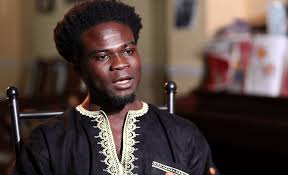
More than two decades after Sierra Leone’s brutal civil war ended in 2002, the country remains haunted by unhealed trauma. For Joseph Kaifala, a survivor of both the Liberian and Sierra Leonean conflicts who has become a leading peacebuilder, the greatest danger today is not violence, but silence.”
The scars of the civil war, once visible in burned villages and amputated limbs, now linger quietly in the minds of our people. After the war, the Truth and Reconciliation Commission (TRC) was established, but our leaders chose to ‘forgive and forget,’ neglecting the vital process of healing,” said Kaifala.
He believes this refusal to confront the past has fueled drug addiction, especially among the youth. “If we do not help people confront their demons, they will turn to drugs,” he warned.
Through the Center for Memory and Reparation, which he founded, Kaifala is creating safe spaces where survivors can finally speak. “Sometimes, just telling someone what happened is the start of healing. We never did that after 2004,” he said, adding: “we cannot erase the past, but we can help people become functional again.”
Material reparations recommended by the TRC are still largely unimplemented, yet the center continues to amplify the voices of amputees, survivors of sexual violence, war-wounded children, and others. “These individuals still carry the weight of their trauma. We are helping them be heard so that the government can respond,” he explains.
Shaping the Future Through Memory and Dialogue
Joseph Kaifala was only a child when he survived imprisonment in Liberia and later fled across conflict zones into Sierra Leone. His memoir, Adama Lui, documents that journey. “I wrote Adama Lui so that young Sierra Leoneans and Liberians could understand what happened in this region during the 1990s and early 2000s,” he said.
As founder and head of the Center for Memory and Reparation and chairman of the Monuments and Relics Commission, Kaifala oversees the symbolic reparations recommended by the TRC, monuments, memorials, and public remembrance. His deepest conviction is that dialogue and empathy are the foundations of lasting peace.“
I was imprisoned as a child with adults… We were guarded by child soldiers – ready to kill us at any moment,” he recalled. He insists the country’s divisions “often stem from ignorance and lack of communication,” and he is determined to teach young people the root causes of conflict so they can lead differently.
Education for Girls: A Personal Mission
In 2002, Sierra Leone ranked as one of the worst places on earth to live; Norway ranked the best. Kaifala experienced both worlds. “I left one of the worst countries in the world and found myself living in one of the best,” he said. Life in Norway showed him what functioning democracy and social trust could achieve.
He returned home determined to give others the opportunities education had given him. “We have diamonds, fertile land, and two perfect seasons. What we lack is leadership rooted in social contract and collective effort,” he noted.
With support from Norway’s Operation Days Work campaign and his own fundraising, he rebuilt schools, launched scholarships, and provided medical relief for amputee children. Yet he saw that girls, especially in the north, were being pushed out of school and into early marriage. In response, he founded First St. Joseph’s Senior Secondary School for girls in Lungi (formerly Sengbe Pieh Academy), now educating more than 70 students.”
We do not just build classrooms. We eliminate barriers like lack of uniforms, textbooks, sanitation, and help improve lives and livelihoods. If Sierra Leone wants to compete globally, we must invest in education. It’s not optional – it’s obvious,” he says. Having lost his own father to the war and grown up in poverty, he credits education with saving his life. “That’s what I want to give others,” he said.
Reviving Heritage Through Storytelling
When Kaifala took over the Monuments and Relics Commission, he found its archives and offices in ruins. “It was in total shambles,” he recalled. “It seemed as though the Commission had never existed.”
He transformed it. “A monument without a story is just an object,” he emphasized. Today the Commission brings schoolchildren on tours, teaching them the living history behind every relic and ruin. “We want young Sierra Leoneans to grow up knowing their heritage. That’s how you create patriots, not through slogans, but through stories.”
He believes storytelling is the root of leadership and peace. “Even mathematics is storytelling,” he asserted with a smile.
Frustrated that accessible histories of Sierra Leone barely existed, he wrote two himself: Free Slaves, Freetown and the Sierra Leone Civil War and others. “If the book you want to read does not exist, write it,” he advised.
He is particularly critical of academic writing that ordinary citizens cannot understand. “Too many Sierra Leoneans use language that no normal person wants to hear.” He quotes the African proverb: “Until the lions have their own storytellers, the story of the hunt will always glorify the hunter.” Then he adds firmly: “We are reclaiming our narrative – storytelling is how we do it. It is how we build a better society.”
A Legacy That Belongs to the People
In an era of personal branding, Kaifala refuses to curate his own legacy. “I have always preferred that people decide what my legacy will be,” he stated. “If you start telling people what to write on your tombstone, it is no longer authentic.”
“If I die and people believe I lived a good life—and that our society is better because of it—then so be it,” he says.
In a country still stitching itself together after war, his quiet insistence is powerful: true legacy is not declared in speeches or built in stone alone. It is lived, day by day, in the healed hearts and educated minds he leaves behind.