
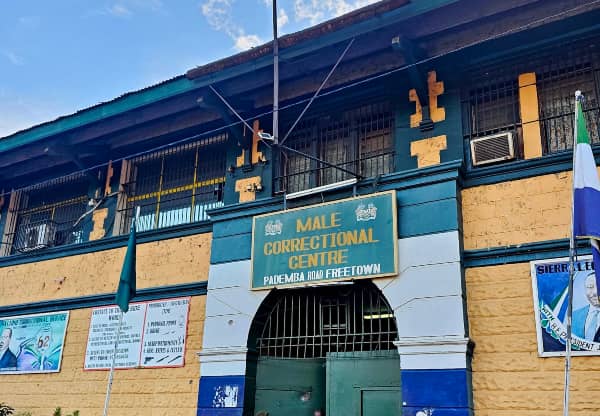
The Centre for Accountability and Rule of Law–Sierra Leone (CARL-SL) has expressed serious concern over reports that the Sierra Leone Correctional Service (SLCS) was unable to transport inmates to court between 17 and 19 August 2026 because of a lack of fuel for its vehicles.
As put, “Justice Delayed is Justice Denied,” CARL-SL described the situation as a significant human rights concern, warning that the inability to transport inmates to court risks undermining their constitutional right to a fair and timely trial.
Clearly, the reported disruption prevented inmates from appearing before the courts, creating the possibility of unnecessary delays in criminal proceedings and extending detention periods for individuals awaiting trial. CARL-SL argues that access to justice should never be compromised by logistical challenges, particularly where personal liberty is at stake.
Beyond the immediate fuel shortage, CARL-SL also highlighted allegations that operational funds intended for the Correctional Service have not been adequately disbursed since the beginning of 2026.
While these claims have not yet been independently verified, the organisation says such reports raise broader concerns about the ability of key justice-sector institutions to effectively perform their constitutional responsibilities.
Reckonably, the organisation noted that correctional facilities form an important part of the criminal justice system and that any breakdown in their operational capacity can have consequences far beyond prison walls.
In that lieu, to transport inmates to court is not merely an administrative inconvenience. Legal experts and human rights advocates have long argued that delays in court proceedings can weaken public confidence in the justice system and contribute to prolonged detention of accused persons who have not yet been convicted.
Sierra Leone’s Constitution guarantees that individuals charged with criminal offences should receive a fair hearing within a reasonable time. Human rights monitoring reports have repeatedly identified delays in court proceedings and prolonged detention as challenges affecting access to justice.
CARL-SL therefore warns that if inmates are unable to attend scheduled court sittings because of fuel shortages or operational difficulties, the consequences could extend to case backlogs, delayed hearings, and further pressure on an already stretched justice system.
In response to the situation, CARL-SL is calling on the Government to urgently address the reported fuel and funding challenges affecting the Correctional Service.
For this reason, the organisation says no inmate should be denied timely access to the courts because of a shortage of basic operational resources. It further argues that ensuring the smooth transportation of inmates is not only a logistical necessity but also a legal and constitutional obligation tied directly to the administration of justice.
Evidently, concerns raised by CARL-SL come at a time when discussions about justice-sector reform, prison overcrowding, and access to fair trials continue to feature prominently in public debate.
For many observers, the issue highlights a broader question: Can a justice system deliver timely justice when one of its critical institutions lacks the resources needed to carry out its basic functions?