
By: Edward Dictionary Caulker
The constitutional debate surrounding Parliament’s passage of the Constitution of Sierra Leone (Amendment) Bill, 2025 has generated intense political, legal, and public discussion across Sierra Leone.
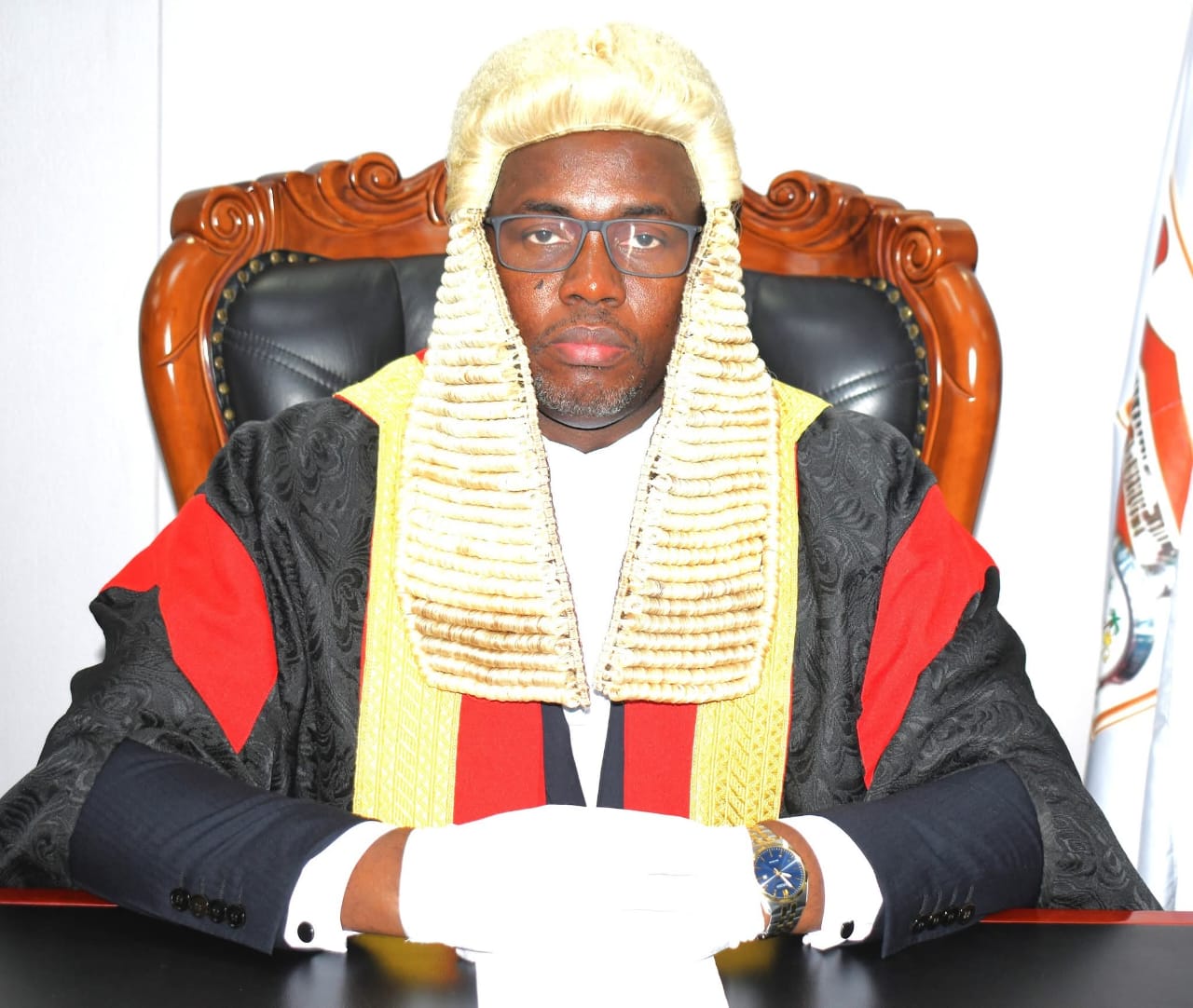
At the centre of that debate is Speaker Segepoh Solomon Thomas’s ruling of 10 August 2026, which provided the basis upon which Parliament proceeded to vote on the Bill after Members of Parliament from the opposition APC walked out of the Chamber.
Since then, competing interpretations have emerged. Some argue that the Speaker conclusively settled the constitutional question. Others contend that the matter remains open for judicial consideration.
A careful reading of the Speaker’s written ruling reveals a more nuanced position.
This editorial does not seek to defend or oppose the ruling. Rather, it seeks to explain what the Speaker actually wrote, the constitutional provisions he relied upon, the reasoning he adopted, and the significance of his decision to refer a constitutional question to the Supreme Court.
The central issue before the Speaker was not whether Parliament had the authority to amend the Constitution. That authority is clearly provided under Section 108(1) of the Constitution of Sierra Leone, 1991, which states:
“Subject to the provisions of this section, Parliament may alter this Constitution.”
The real question was whether the Constitution of Sierra Leone (Amendment) Bill, 2025 required support from two-thirds of all Members of Parliament, or whether it could be determined by a simple majority of Members present and voting.
To answer that question, the Speaker examined the relationship between Sections 91(1), 94(2), and 108 of the Constitution.
Section 91(1): The Speaker’s Starting Point
The Speaker’s analysis begins with Section 91(1), which provides:
“Except as otherwise provided in this Constitution, any question proposed for decision in Parliament shall be determined by a majority of the votes of the Members present and voting.”
According to the Speaker, this section establishes the general constitutional rule governing decision-making in Parliament.
His reasoning is straightforward.
If the Constitution does not expressly require a different voting threshold for a particular matter, Parliament must apply the ordinary rule contained in Section 91(1).
In the Speaker’s view, the phrase “Except as otherwise provided in this Constitution” is critical because it recognizes that certain matters may require special procedures while everything else remains subject to the general majority rule.
This formed the foundation of his ruling.
Section 108: Where the Debate Begins
The more contentious part of the ruling concerns Section 108.
Section 108(2) states that a Bill for an Act of Parliament under that section shall not be passed unless:
• the Bill is published in at least two issues of the Gazette before first reading; and
• it is supported on second and third readings by votes of not less than two-thirds of Members of Parliament.
Many legal commentators and political actors have interpreted this provision to mean that every constitutional amendment requires a two-thirds majority.
The Speaker, however, adopts a different interpretation.
He argues that constitutional provisions must be read together and not in isolation. In his ruling, he emphasizes that Section 108 must be interpreted as a coherent constitutional framework rather than as a single isolated clause.
According to the Speaker, the phrase “under this section” found in Section 108(2) becomes significant when read alongside Section 108(3).
The Significance of Section 108(3)
Section 108(3) identifies specific constitutional provisions that receive special protection.
These include:
• Section 108 itself;
• Chapter III (Fundamental Human Rights and Freedoms);
• Sections 46, 56, 72, 73, 74(2), 74(3), 84(2), 85 and 87;
• Sections 105, 110–119;
• Sections 120, 121, 122, 123 and 124;
• Sections 128, 129, 131, 132 and 133;
• Sections 135, 136, 137 and 140;
• Sections 151, 156 and 167.
The Speaker interprets this list as evidence that the Constitution distinguishes between entrenched provisions and non-entrenched provisions.
His argument is that where the Constitution intended to impose special amendment procedures, it expressly identified the provisions concerned.
Consequently, he concludes that constitutional provisions not included in Section 108(3) do not automatically attract the same constitutional threshold.
Why the Speaker Reverted to Section 91(1)
Having examined the Constitution of Sierra Leone (Amendment) Bill, 2025, the Speaker concluded that the provisions affected by the Bill were not among those expressly protected under Section 108(3).
On that basis, he ruled that Parliament should apply the general voting rule contained in Section 91(1).
In practical terms, this meant that the Bill could be decided by a majority of Members present and voting.
This was the constitutional pathway upon which Parliament proceeded.
Whether that interpretation is ultimately accepted by legal scholars or constitutional lawyers is a separate question.
The important point is that this was the Speaker’s constitutional reasoning as set out in the ruling itself.
The ruling also draws support from previous parliamentary practice.
Speaker Thomas references constitutional amendments that were reportedly enacted without recourse to a two-thirds majority, including an amendment to Section 79 in 2012.
His reliance on precedent appears intended to demonstrate that Parliament has previously distinguished between entrenched and non-entrenched constitutional provisions when determining voting requirements.
The existence of precedent does not automatically settle a constitutional dispute. However, it formed part of the Speaker’s justification for the course Parliament ultimately adopted.
Section 94(2) and Parliamentary Authority
Another important aspect of the ruling is the Speaker’s reliance on Section 94(2) of the Constitution.
That provision states:
“No decision, order or direction of Parliament or any of its Committees or the Speaker, relating to the rules of procedure of Parliament, or to the application or interpretation of such rules… shall be inquired into by any court.”
This section protects parliamentary proceedings from judicial interference in matters relating to parliamentary procedure.
The Speaker expressly invoked Section 94(2) in making his ruling.
From his perspective, the decision regarding the applicable voting threshold was made within the context of parliamentary procedure and parliamentary decision-making.
This is one reason why supporters of the ruling argue that Parliament acted within its constitutional authority.
The Most Important Paragraph in the Entire Ruling
Ironically, the most important paragraph may be the last one.
After concluding that Parliament should proceed under Section 91(1), the Speaker writes:
“However, since the question whether or not a non-entrenched Constitutional provision can be altered by recourse only to Section 91(1)… is of grave public interest, I refer this question to the Supreme Court for an opinion…”
This paragraph deserves close attention.
If the Speaker believed there was absolutely no constitutional uncertainty, there would have been little reason to seek the opinion of the Supreme Court.
Instead, he expressly acknowledges that the issue raises a significant constitutional question and seeks judicial guidance for future discussions.
That referral is not incidental.
It is part of the ruling itself.
What the Speaker Actually Decided
A fair reading of the ruling suggests that the Speaker decided three things.
First, Parliament had to determine the applicable voting threshold for the Constitution of Sierra Leone (Amendment) Bill, 2025.
Second, he concluded that Section 91(1), rather than the special protections in Section 108(3), applied to the Bill before Parliament.
Third, Parliament could therefore proceed with voting under the general majority rule.
Those were the operative parts of his ruling.
What the Speaker Did Not Decide
Equally important is what the Speaker did not decide.
He did not declare that constitutional interpretation belongs exclusively to Parliament.
He did not state that constitutional questions can never receive judicial consideration.
Nor did he declare that all future constitutional amendments must be determined in the same way.
In fact, by referring the matter to the Supreme Court, he acknowledged that a broader constitutional question exists beyond the immediate parliamentary proceedings.
Why the Supreme Court Referral Matters
The referral recognizes that constitutional democracy functions best when institutions perform their respective roles.
Parliament legislates.
The Speaker regulates parliamentary proceedings.
The judiciary interprets constitutional questions when they arise.
By requesting the Supreme Court’s opinion, the Speaker appears to have recognized that the issue extends beyond the immediate vote and touches upon the broader architecture of constitutional governance.
That is why the final paragraph remains one of the most consequential parts of the ruling.
The Speaker’s ruling was not merely about numbers.
It was not simply a dispute between a simple majority and a two-thirds majority.
Rather, it was an attempt to answer a constitutional question using the Speaker’s interpretation of Sections 91(1), 94(2), and 108 of the Constitution.
Whether that interpretation ultimately commands universal acceptance is a matter for public debate, legal scholarship, and institutional consideration.
What cannot be disputed is that the Speaker provided a constitutional rationale for Parliament’s actions while simultaneously acknowledging that the underlying question remains significant enough to warrant guidance from the Supreme Court.
In that sense, the ruling did two things at once: it allowed Parliament to act, and it invited the country’s highest court to help clarify the constitutional principles involved.
For citizens, the most useful approach is neither blind acceptance nor automatic rejection. It is careful reading, critical thinking, and engagement with the Constitution itself.
Constitutional democracy is strengthened not when institutions avoid difficult questions, but when those questions are confronted openly, lawfully, and through the mechanisms provided by the Constitution.Sources: Constitution of Sierra Leone, 1991 — Sections 91(1), 94(2), 108(1), 108(2), and 108(3).