
The Mustapha Kanu Tragedy and Sierra Leone’s Duty to Protect Its Children.
By Edward Dictionary Caulker
Managing Editor, SierraEye Magazine
Every day, Sierra Leoneans wake up to headlines dominated by politics, governance debates, economic challenges, and international affairs. These issues are important because they shape the direction of the nation. Yet sometimes a story emerges that forces society to pause and confront something far deeper than politics a story that challenges our humanity itself.
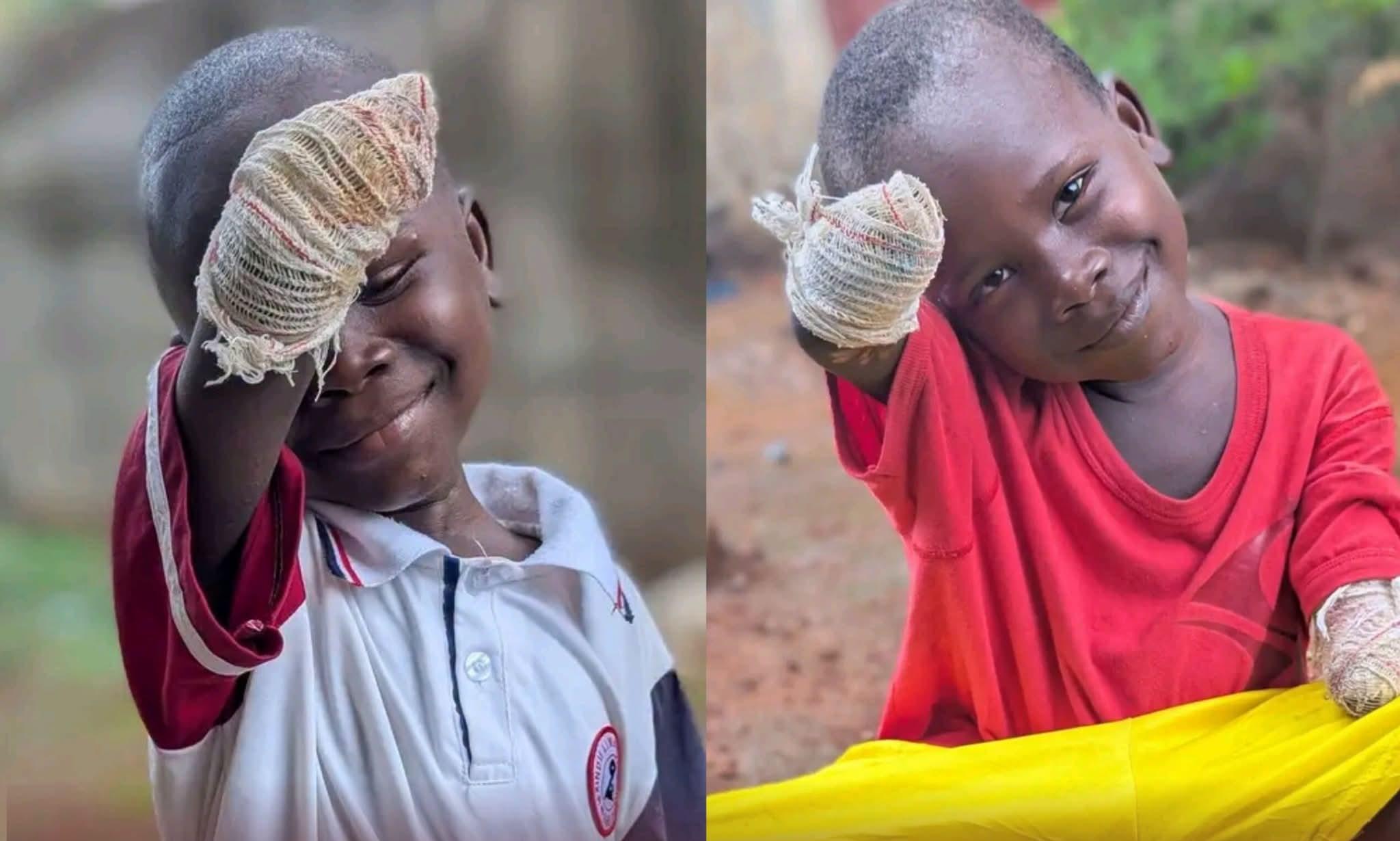
The tragic case of five-year-old Mustapha Kanu is one such story.
According to reports, the young boy from Sussex Village in Freetown lost both of his hands after suffering severe injuries allegedly inflicted by his own grandfather, Abu Bakarr Jalloh. What began as a disciplinary incident reportedly connected to a misplaced phone charging receipt ended in one of the most horrifying cases of child abuse Sierra Leone has witnessed in recent years.
The images, testimonies, and medical realities surrounding this case have shocked the nation. They have generated public outrage, grief, and disbelief. But beyond the emotion lies a deeper question: How does a society reach a point where a child can suffer such unimaginable violence within the very home that is supposed to protect him?
What Happened to Mustapha Kanu?
To fully appreciate the magnitude of this tragedy, it is important to understand what transpired.
According to evidence presented before the court, Mustapha had been living with his grandfather after his parents relocated from the family residence. At the insistence of the grandfather, the child remained behind under his care. During the seven months he reportedly lived there, he was never enrolled in school.
The incident that would permanently alter his life reportedly began over a mobile phone charger.
The court heard that Mustapha and his 14-year-old uncle, Mohamed, had been sent to a nearby telecentre. Upon arrival, they were informed that the correct charger was already available. Mohamed handed the charger to Mustapha and instructed him to return it home while he continued to school.
When the child arrived home later than expected, his grandfather allegedly became enraged.
According to testimony before the court, Mustapha’s hands were tied to a wooden stick in a crucifix-like position using an inner tyre tube. Boiling water and pepper were then allegedly poured onto his hands.
Ignoring the child’s cries of pain, the grandfather reportedly locked him inside the house and left for the rest of the day.
Later that afternoon, Mohamed returned from school and found Mustapha still tied up and in severe pain. When asked what had happened, the child reportedly replied:
“Na grandpa. E put hot wata en peppeh na me hand, ar dae feel pain.”
Translated:
“It was grandpa. He put hot water and pepper on my hands. I am in pain.”
Fearful of his father’s temperament, Mohamed reportedly did not intervene.
It was not until evening that Mustapha’s step-grandmother, Kadijatu Kamara, returned from the market, discovered the child’s condition, and untied him.
According to evidence before the court, immediate medical treatment was still not sought.
Days passed.
The injuries worsened.
By the third day, the condition of the child’s hands had deteriorated significantly. The grandfather reportedly contacted a neighbour and falsely claimed that Mustapha had suffered accidental burns.
The neighbour assisted in transporting the child to a clinic, which immediately referred him to Emergency Hospital because of the severity of his injuries.
At Emergency Hospital, Matron Bintu Jawara reportedly observed signs consistent with serious abuse and alerted officers at the Adonkia Police Station.
Police responded swiftly and arrested Abu Bakarr Jalloh.
Doctors at Emergency Hospital then delivered devastating news to the family. Both of Mustapha’s hands would have to be amputated in order to save his life.
Unable to accept such a life-changing diagnosis, the family sought a second opinion at Connaught Hospital.
Doctors there reached the same conclusion.
The injuries were too severe.
Both hands had to be amputated.
The chronology of events is deeply troubling because it reveals not only the brutality of the initial act but also the consequences of delay. By the time medical intervention was secured, the damage had become irreversible.
Beyond One Man’s Crime
The High Court’s decision to sentence the grandfather to 75 years imprisonment sends a strong and necessary message. It demonstrates that Sierra Leone’s justice system is prepared to treat extreme violence against children as a serious criminal offence deserving severe punishment.
However, while the conviction is important, it should not mark the end of the conversation.
If society treats this case merely as the crime of one individual, then it risks ignoring the broader issues that made such a tragedy possible.
Child abuse rarely begins with catastrophic violence. It often starts with attitudes that normalize excessive punishment, humiliation, fear, and unchecked authority over children. In many communities across Africa, including Sierra Leone, physical discipline remains widely accepted as a method of correction. While discipline and guidance are essential parts of parenting, there is a dangerous line between correction and cruelty.
The Mustapha Kanu case reminds us what can happen when that line is crossed.
Equally disturbing is the possibility that Mustapha Kanu’s case became national news only because the injuries were too severe to conceal.
Across Sierra Leone, many children endure physical abuse behind closed doors without attracting media attention, police intervention, or public outrage. Some cases are quietly settled within families. Others are hidden behind cultural notions of discipline and respect for elders. Many victims suffer in silence because they have neither the voice nor the protection needed to challenge their abusers.
The difference in this case is not necessarily that violence occurred.
The difference is that the consequences became impossible to hide.
That reality should concern us all.
If a nation only responds when abuse becomes catastrophic, then it is reacting to failure rather than preventing it.
Laws Exist. Implementation Is the Test.
One of the most significant aspects of this tragedy is that Sierra Leone’s laws already provide protection against such abuse.
The Domestic Violence Act of 2007 and the revised Child Rights Act of 2025 clearly recognize violence against children as a public matter requiring intervention. The law does not consider severe abuse within families a private affair. It is a crime.
The Child Rights Act establishes structures for child protection at village and chiefdom levels, while the Domestic Violence Act criminalizes abuse within family relationships.
In legal terms, there is little ambiguity.
The challenge is not the absence of laws.
The challenge is ensuring that those laws are actively enforced before children become victims rather than after their lives have been permanently altered.
A question that deserves reflection is whether there were warning signs before the tragedy occurred.
Did neighbours notice patterns of abuse?
Did relatives observe concerning behaviour?
Were community leaders aware of tensions within the household?
Did anyone feel empowered enough to intervene?
These questions are not meant to distribute blame across an entire community. Rather, they highlight a difficult reality: child protection cannot depend solely on police officers, courts, or social workers. It requires vigilance from families, schools, religious institutions, community leaders, and ordinary citizens.
Protecting children is a collective responsibility.
Amid the horror of this case, there is also an important lesson about the value of functioning institutions.
Had healthcare workers ignored what they observed, the truth might never have emerged. The vigilance displayed by Matron Bintu Jawara and the swift response by officers at the Adonkia Police Station demonstrate why professional ethics and institutional responsibility remain critical pillars of child protection.
Their actions remind us that safeguarding children cannot rest solely within families. Schools, hospitals, religious institutions, local councils, and law enforcement agencies all have a role to play in identifying abuse and preventing further harm.
In this case, those interventions likely saved Mustapha’s life, even if they could not save his hands.
For Mustapha Kanu, the consequences extend far beyond physical injury.
The loss of both hands means a lifetime of adaptation, rehabilitation, and support. Simple tasks that most children perform without thought may now require assistance, specialized equipment, or extensive training.
His future remains possible, but it has undeniably become more difficult.
Yet the physical injuries tell only part of the story.
Beyond the loss of both hands lies another wound that cannot easily be seen. A child who suffers such violence at the hands of a trusted family member may carry emotional and psychological scars for years. The trauma of betrayal, fear, and pain can shape a child’s confidence, relationships, and sense of security long after physical wounds have healed.
While courts can punish offenders, healing the invisible wounds suffered by child victims requires counselling, rehabilitation, family support, and sustained community care.
The conversation should also extend beyond justice and rehabilitation to inclusion.
Mustapha will now grow up as a child living with a disability. Sierra Leone must ensure that children who suffer life-altering injuries are not abandoned after public attention fades. Access to education, assistive technology, psychosocial support, and opportunities for independent living will be essential if he is to rebuild his future with dignity and hope.
This tragedy also raises a broader national question.
Sierra Leone frequently speaks about human capital development, educational transformation, youth empowerment, and preparing the next generation to lead the country.
These ambitions are commendable.
But such goals become difficult to achieve when children are not guaranteed safety within their own homes.
A nation’s development cannot be measured solely by economic growth, new infrastructure projects, or political achievements. It must also be measured by how effectively it protects its most vulnerable citizens.
When a child suffers violence so severe that permanent disability becomes the outcome, society must ask itself whether enough is being done to uphold the dignity and rights of children.
Development without protection is incomplete development.
There is a tendency to discuss child welfare only when shocking incidents dominate the headlines. Yet protecting children should not be an occasional reaction to public outrage. It should be a permanent national priority.
A society is ultimately judged not by how it treats its most powerful members but by how it protects its most vulnerable ones.
Mustapha Kanu’s story is heartbreaking because it reveals the devastating consequences of violence against a child. But it also presents Sierra Leone with an opportunity to reflect, reform, and recommit itself to the protection of children.
The responsibility does not belong to government alone. Families, schools, religious institutions, traditional leaders, civil society organizations, and communities all have a role to play.
The safety of children cannot be outsourced.
The sentence handed down by the High Court may close a legal chapter, but it cannot restore a childhood that has been permanently altered.
Justice has been served in the courtroom.
But justice alone cannot return what has been lost.
Mustapha Kanu’s story should not simply be remembered as another tragic headline. It should become a national turning point one that forces families, communities, institutions, and policymakers to confront an uncomfortable truth:
The greatest threat to a child is sometimes not found on the streets, but within the walls of the home itself.
If Sierra Leone truly believes that children are the future, then protecting them must become more than a slogan. It must become a national obligation.
Because when a child loses both hands through violence, the tragedy is not confined to one family.
It becomes a national wound one that demands not only punishment for the offender, but also reflection, accountability, prevention, and action from all of society.
The question now is no longer whether justice has been served.
The question is whether Sierra Leone will learn enough from this tragedy to ensure that another child never suffers the same fate. If the answer is yes, then Mustapha Kanu’s suffering may yet become a catalyst for stronger child protection, greater community vigilance, and a renewed national commitment to safeguarding every child. If the answer is no, then this tragedy risks becoming another headline that shocks the nation briefly before fading into memory.