
By Edward Dictionary Caulker
Raaaaaaa!!!!!!
Take a moment to read this piece on the real contradictions of King Boss LA.
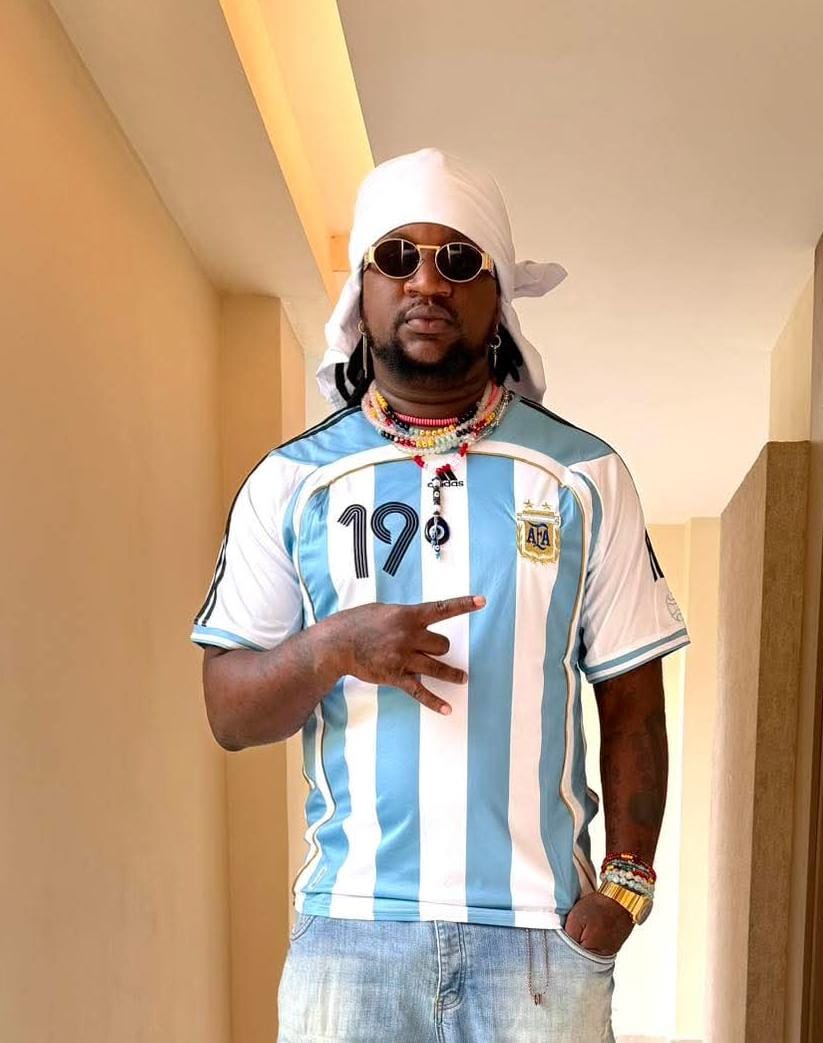
During the pre-recorded one-hour interview aired on Liberty Online TV’s Wan on Wan Show, hosted by Kadija Bangura, Alhaji Amadu Bah, popularly known as King Boss LA, leader of the Red Flag Muzik/Movement, opened up on his lifestyle, music career, and his long-running encounters with the law.
What started as a routine personality interview gradually evolved into a conversation about controversy, imprisonment, public perception, and accountability.
One of the first things King Boss LA said was that the Sierra Leone entertainment industry is “tough, rough and crazy.”
Yet, despite the challenges, he expressed gratitude for the loyal fan base that has stood by him throughout his journey.
Then the interview got deeper. Stating that he was never part of the
menu(government biznes) and never took anything or ate from it.
When Kadija asked why he constantly finds himself in conflict with the law, including multiple prison terms, his arrest at Benghazi, and the controversial cutting of his dreadlocks, King Boss LA delivered what would become the defining line of the interview:
“The law dae kam in conflict with me.”
It was a striking statement.
Most people would say they come into conflict with the law. King Boss LA framed it differently. In his view, it is the law that comes looking for him.
Explaining why he repeatedly ends up behind bars, he said:
“Maybe it’s because I am the stand-up guy who could step up for what he believes in.”
He argued that he is often targeted.
“They try to nail me and make me the target.”
Referencing the fuel station incident in which he was accused of stealing a Tecno Spark 6 phone and Le4 million, King Boss LA questioned the allegations against him.
“Do I really look like a thief as they are painting me?”
He also expressed frustration with the justice system, claiming:
“You cannot win a case which the system has already programmed on how it’s going to go.”
For him, the courts and legal process have not always been fair.
“The court system is against me because I am the Balotelli, or maybe because some people want to take advantage of me.”
Despite his numerous legal troubles, King Boss LA maintained that he had only been found guilty once.
Perhaps the most emotional moment came when he reflected on his nine-year prison sentence.
“I was sentenced to nine years in prison for assault and robbery. I didn’t know I was going to leave jail until the last day.”
He went on to claim that even his name was not originally typed on the presidential pardon list.
“Even my name was not typed on the presidential pardon release list. It was a pen they used to write my name.”
When asked to clarify what he meant by saying the law comes into conflict with him, he explained:
“It is the law that comes to hold me. I have never knocked on the police station for a room nor at the prisons. It is what they often do to me that results in those things I do.”
The interview also touched on his appointment as a Peace Ambassador, a role he said initially caught him by surprise.
According to him, nobody informed him beforehand.
“Nobody told me about it. I was later called. I advised them to write it formally on paper, not just verbally. Let it be official. That was when the write-up came, and I was appointed.”
Whether one agrees with King Boss LA or not, the interview offers a rare insight into how one of Sierra Leone’s most controversial musicians views his life, his struggles, and his relationship with authority.
His statement “the law dae kam in conflict with me” may sound simple, but it raises deeper questions about celebrity, accountability, justice, public perception, and the complicated relationship between fame and the law in Sierra Leone.
For supporters, it is the story of a man constantly misunderstood and targeted. For critics, it is the story of a man unwilling to take responsibility for the consequences of his actions.
Either way, the conversation is far from over.