
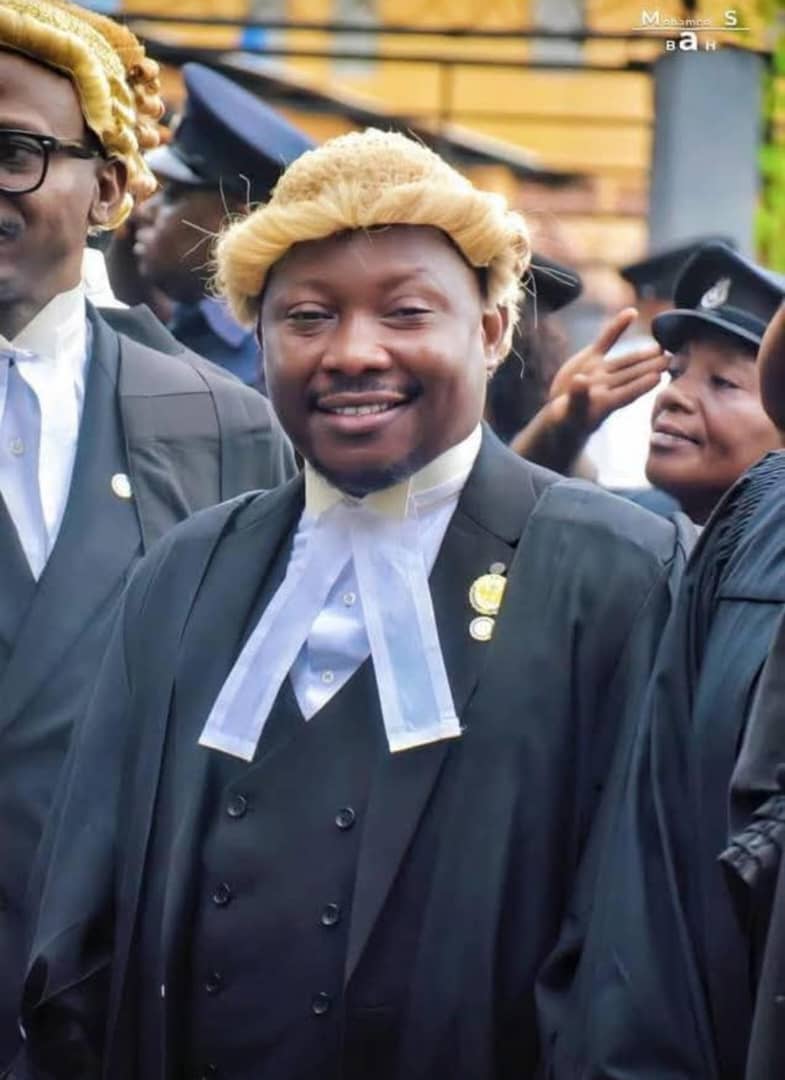
Last Friday, at the Bintumani Conference Centre, the Public Relations Officer of the Sierra Leone Bar Association, Alfred Kamanda, stood before cameras after police blocked lawyers from entering their own Annual General Meeting. The frustration, the sense of powerlessness, the financial waste, etc all came together in that moment. When he spoke, his voice broke. Tears came.
Since then, social media and street conversations have filled with mockery. “Man no de cry.” “Lawyer wey cry.” “E lose control.” The jokes write themselves in a culture that still teaches boys, from a young age, that tears are for women and children. Real men swallow pain. Real men stay hard. Real men do not show weakness.
This reaction is familiar. It is also deeply wrong. And it is time we, as Sierra Leoneans, begin to change it.
Alfred Kamanda is a grown man, a lawyer, and a public officer who had invested energy and Association resources into an event that was shut down without a court order. We may disagree with him regarding his position in Bar Association executive but showing emotion in that situation is not weakness. It is a normal human response. To mock it is to demand that men perform an unnatural version of strength that ultimately damages us all.
The idea that African men must suppress emotion is not ancient wisdom. It is a heavy cultural script that has been reinforced across generations. Boys are told “stop crying” long before they understand what the feeling means. Men who show vulnerability risk being labelled soft, uncontrolled, or less masculine. The result is predictable: silence, bottled anger, sudden explosions, depression that goes untreated, and relationships that suffer because feelings are never named.
We see the consequences everywhere. Young men who cannot process failure or heartbreak turn to substances or violence. Fathers who never learned to express care struggle to connect with their children. Husbands who were taught that emotion equals weakness leave their wives carrying the full emotional labour of the home. Public figures who must always appear invincible become brittle under pressure. None of this makes our society stronger. It only makes pain quieter and more dangerous.
Crying does not erase a man’s competence, courage, or leadership. It does not make Alfred Kamanda less of a lawyer or less of a Sierra Leonean. It makes him human. The same men who mock tears will often praise “resilience” and “endurance.” True resilience includes the ability to feel fully and then stand up again. Suppressing emotion is not strength; it is a delayed cost that someone eventually pays, the man himself, his family, or the wider community.
Other societies have begun to shift this conversation. In many places, people now recognise that emotional honesty in men is a sign of maturity, not fragility. Sierra Leone does not need to copy anyone. We can draw from our own values. Our culture already understands communal care, respect for dignity, and the importance of standing together in difficulty. Extending that same compassion to a man who shows emotion is not foreign. It is consistent with the best of who we already are.
Leaders, in particular, should not be punished for humanity. When a public officer expresses genuine disappointment at the breakdown of process and the use of force against a professional body, the proper response is not ridicule. It is reflection on the events that caused the emotion in the first place. Mocking the tears distracts from the more serious questions about interference, transparency, and the independence of institutions.
We can choose differently. We can teach our sons that feelings are information, not failure. We can allow our brothers, colleagues, and leaders the full range of human response without stripping them of respect. We can stop confusing emotional suppression with manhood.
Alfred Kamanda cried on national television because something that mattered to him, and to many others, was taken away in an undignified way. That reaction deserves understanding, not mockery. If we continue to police men’s tears so strictly, we will keep producing men who cannot name their pain until it becomes someone else’s problem.
Tears are not the opposite of strength. Sometimes they are the first honest step toward it. Sierra Leone will be healthier when we finally accept that simple truth.