By Edward Dictionary Caulker
Parliament’s approval of Sierra Leone’s 2026 Supplementary Budget marks more than a routine adjustment to public finances. It reflects the difficult choices policymakers must make when global events reshape domestic economic realities. This year’s fiscal revision was not driven by political ambition or new spending priorities. Rather, it was triggered by an external shock the sharp rise in international oil prices following conflict in the Middle East which forced Government to revisit assumptions underpinning the original 2026 Budget.
Finance Minister Sheku Ahmed Fantamadi Bangura presented the supplementary budget under the theme “Strengthening Budget Credibility to Safeguard Macroeconomic Stability and Protect Livelihoods of Citizens.” Government’s position was straightforward: maintaining the original budget would no longer reflect prevailing economic conditions. Instead of ignoring worsening realities, it sought Parliament’s approval to revise revenue projections, increase critical subsidies, and adjust expenditure to preserve fiscal stability.
At its core, the supplementary budget represents an exercise in fiscal realism. Governments that fail to revise budgets when economic conditions change risk widening deficits, accumulating unpaid obligations, and weakening investor confidence. Sierra Leone’s decision to recalibrate its fiscal framework therefore acknowledges that sound public financial management requires both flexibility and discipline.
One of the clearest indicators of the changing economic environment is the revised outlook for growth and inflation. Economic growth for 2026 has been reduced from 4.5 percent to 4.0 percent, reflecting slower domestic production and weaker economic activity. Meanwhile, inflation, which had fallen significantly to 4.4 percent in December 2025, climbed to 14.8 percent by June 2026, largely driven by higher fuel, transport, and rental costs. Government now projects inflation to ease to 11.6 percent by year-end, provided global oil prices stabilise.
These figures highlight Sierra Leone’s continued vulnerability to developments beyond its borders. Despite domestic policy efforts, imported inflation remains a major factor influencing household spending, business operations, and public finances.
Revenue expectations have also been revised downward. Domestic revenue has been reduced by NLe650.9 million, lowering the target from NLe22.2 billion to NLe21.5 billion, equivalent to 11.5 percent of GDP. Government attributes the decline primarily to weaker collections from Goods and Services Tax (GST), customs and excise duties, and road user charges as fuel consumption and broader economic activity slowed during the first half of the year.
Not all revenue streams performed poorly. Income tax collections exceeded expectations and were revised upward to NLe8.5 billion, while mining revenue increased due to stronger iron ore royalties. In addition, grants from development partners rose from NLe3.8 billion to NLe4.1 billion, supported by European Union budget assistance and additional project financing. These gains helped cushion, though not eliminate, the broader revenue shortfall.
Perhaps the most notable feature of the supplementary budget is its increased commitment to subsidies. Total expenditure and net lending have been revised upward to NLe30.3 billion, while recurrent expenditure has increased by NLe1.4 billion. A significant portion of this additional spending is directed toward energy support.
Government allocated NLe1.4 billion to EDSA to meet obligations owed to Independent Power Producers and prevent an immediate increase in electricity tariffs. Another NLe243 million has been earmarked as fuel subsidies for Oil Marketing Companies to reduce pressure on pump prices.
These allocations carry important policy implications. On one hand, they provide temporary relief to households and businesses already struggling with rising living costs. Increased fuel and electricity prices would inevitably push up transport fares, food prices, and production costs. Through these interventions, Government aims to soften those immediate impacts.
On the other hand, subsidies are costly and rarely sustainable over the long term. They consume fiscal space that could otherwise support education, healthcare, infrastructure, and agricultural development. Consequently, while subsidies may be justified during periods of economic stress, they cannot become a permanent substitute for structural reforms within Sierra Leone’s energy sector and domestic revenue system.
To accommodate higher recurrent spending, Government also proposed rationalising portions of the domestic capital budget through an updated Public Investment Programme. In practical terms, this means some infrastructure projects may progress more slowly as resources are redirected toward immediate economic pressures.
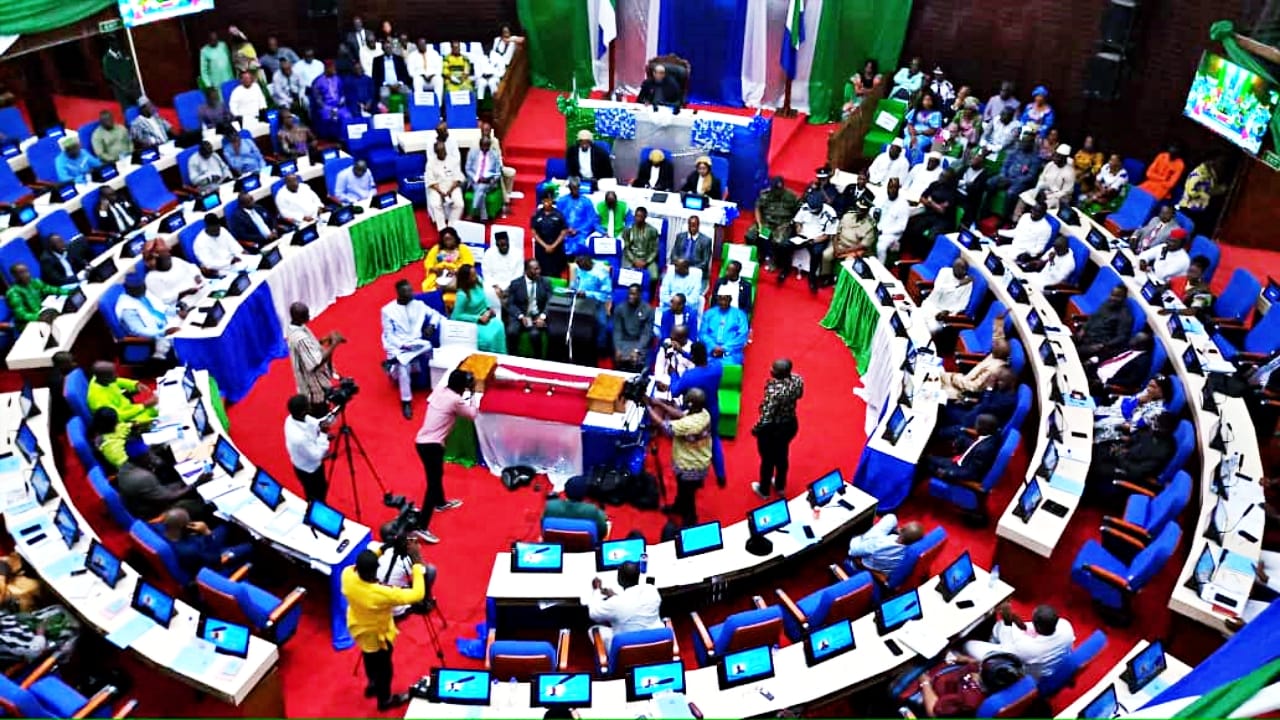
Parliament’s endorsement therefore represents more than approval of revised figures. It signals acceptance that preserving macroeconomic stability currently takes precedence over expanding development expenditure. Members from both the governing SLPP and opposition APC acknowledged progress made over the past year while calling for stronger domestic revenue mobilisation and continued expenditure discipline. Such broad agreement suggests recognition that Sierra Leone’s economic challenges extend beyond partisan politics.
Still, Parliament’s responsibility does not end with approving supplementary appropriations. Oversight becomes even more important once additional spending authority is granted. Every Leone allocated for subsidies, energy payments, and revised programmes must be transparently accounted for. Citizens deserve confidence that emergency expenditures reach their intended targets and deliver measurable public benefits.
Another important dimension of the supplementary budget concerns credibility. International lenders, development partners, and investors closely monitor whether governments adjust policies when circumstances change. Revising unrealistic revenue targets and acknowledging external shocks can strengthen confidence because it demonstrates fiscal transparency rather than dependence on overly optimistic assumptions.
Yet credibility ultimately depends on implementation. Budget revisions alone cannot guarantee economic stability unless ministries control expenditure, improve procurement systems, reduce waste, and strengthen domestic tax administration. Sierra Leone’s long-term resilience will depend less on emergency adjustments and more on expanding productive sectors capable of generating sustainable revenue.
Government deserves recognition for resisting the temptation to ignore deteriorating global conditions. Equally, Parliament deserves credit for examining and approving a revised framework designed to prevent greater fiscal disruption. Nevertheless, approval should not be mistaken for completion. The real test lies in execution.
For ordinary Sierra Leoneans, success will not be measured by revised budget tables or parliamentary debates. Instead, it will be judged by whether transport costs stabilise, electricity remains reliable, inflation eases, businesses continue operating, and employment opportunities improve. Those are outcomes citizens experience directly in their daily lives.
Ultimately, the 2026 Supplementary Budget reflects a country navigating uncertainty rather than abandoning fiscal discipline. It seeks to balance competing priorities: protecting livelihoods, maintaining macroeconomic stability, preserving investor confidence, and safeguarding essential public services amid external shocks.
Whether those objectives are achieved will depend not only on Government’s commitment to prudent financial management but also on Parliament’s vigilance and continued public accountability.
In times of global uncertainty, responsible budgeting is not simply about spending more or spending less. It is about spending wisely, responding honestly to changing realities, and ensuring that every adjustment made today strengthens Sierra Leone’s economic foundations for tomorrow.