
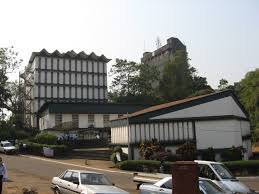
Abstract
This essay proposes a field-defining intervention into the study of Fourah Bay College at the threshold of its bicentenary. It argues that the college should not be approached merely as an object of commemoration, nor reduced to the familiar myth of the “Athens of West Africa.” Instead, Fourah Bay College should be studied through its ruptures: the missing archive of origins, the wartime displacement to Mabang, the end of regional monopoly during decolonization, post-1960 absorption into the University of Sierra Leone, the migration of founding journals in religion and languages with European scholars by the end of the 1960s, the later migration of Sierra Leonean scholars by the end of the 1970s, the failure of local publication initiatives such as The Journal of the Historical Society of Sierra Leone, and the uneven emergence of professional schools amid steep institutional decline. The central claim is that Fourah Bay College suffers not only from administrative and infrastructural crisis, but from a broken relationship to its own past: a past too often mythologized and too rarely studied as a field of power, publication, and scholarly sovereignty.
1. Against Bicentenary Nostalgia
Fourah Bay College at two hundred demands a language stronger than celebration. The bicentenary must become an occasion for reckoning, not merely homage. To commemorate the college as the oldest Western-style institution of higher learning in sub-Saharan Africa is necessary, but not sufficient. To repeat that it made Freetown the “Athens of West Africa” is historically resonant, but also dangerous when the phrase becomes a substitute for analysis. A past too often mythologized does not cease to be real; rather, it becomes harder to study. Myth protects memory, but it can also flatten contradiction, silence failure, and convert institutions into monuments before their living crises have been explained.
The point is not to dethrone Fourah Bay College from its place in African intellectual history. The point is to rescue that history from celebratory enclosure. Fourah Bay College did not simply produce clergy, teachers, administrators, scholars, lawyers, doctors, judges, and nationalist elites. It also produced archives and absences, reputations and ruins, journals and silences, movements of people and movements of knowledge away from Freetown. Its history is therefore not simply an institutional biography. It is a field of inquiry into the making and unmaking of higher education in West Africa.
This essay argues that a scholarship adequate to the bicentenary must begin from rupture. The history of Fourah Bay College should be written not as a smooth ascent from missionary school to regional citadel, followed by a tragic decline, but as a sequence of uneven transformations: foundation, accumulation, displacement, decolonizing compression, absorption, contraction, migration, and partial reinvention. The college did not fall in one movement. Nor did it seamlessly modernize. It survived by becoming other than what it had been.
2. Defining the Field: From Institution to Problem-Space
To define the field of Fourah Bay College studies is to move beyond the narrow question, “What happened to the college?” That question is still necessary, but insufficient. The more productive questions are: How has the college been remembered? What kinds of evidence have been used to certify its greatness? Which archives are missing, fragile, or displaced? What forms of scholarship did the college generate locally, and why did those infrastructures fail? How did the college lose its regional monopoly without disappearing? How did medicine, law, and other professional formations emerge amid decline? And how does the present crisis reproduce older unresolved contradictions?
Fourah Bay College studies should therefore be conceived as an interdisciplinary field organized around five overlapping concerns. The first is archival: the survival, loss, dispersal, and symbolic use of documents. The second is intellectual: the production of knowledge in theology, history, social sciences, African studies, literature, medicine, law, and the social sciences. The third is institutional: the college’s relation to church, empire, colonial government, Durham affiliation, the University of Sierra Leone, and postcolonial state power. The fourth is regional: the college’s role in West African educational mobility before the rise of competing university colleges and national universities. The fifth is crisis-oriented: the relationship between historical prestige and contemporary incapacity.
In this sense, Fourah Bay College is not only an object of Sierra Leonean history. It is a lens through which to study African universities after empire. Its trajectory forces us to ask how prestige is inherited, how institutions are absorbed, how journals die, how scholars migrate, how professional schools emerge under constrained conditions, and how a university can remain symbolically grand while materially weakened.
3. The Missing Register and the Problem of Origins
The missing student register allegedly containing the signature of Samuel Ajayi Crowther is not a marginal anecdote. It is a methodological opening. The story of Crowther as foundational student is central to the moral architecture of Fourah Bay College: the liberated African child who became bishop, scholar, intellectual, translator, and emblem of the institution’s wider African mission. Yet the alleged register is absent. That absence requires discipline. It asks the historian to distinguish between biography, institutional tradition, commemorative memory, missionary record, and archival proof.
The missing register should not lead to the abandonment of Crowther. Nor should the force of tradition be allowed to erase the evidentiary gap. Rather, the absence should be placed at the center of the narrative. It reveals the fragility of origins. It shows how institutions are founded not only by charters and buildings, but by stories that later generations need in order to authorize themselves. Crowther can remain at the threshold of Fourah Bay’s history, but as a figure whose foundational status must be read through a layered archive: surviving missionary accounts, biographical traditions, institutional memory, and the powerful afterlife of a missing signature.
This is where the mythologized past becomes productive. Myth is not merely falsehood. In institutional history, myth is often a compressed form of aspiration. The danger lies in allowing myth to do the work of history. The task, therefore, is not to choose between Crowther as fact and Crowther as legend, but to ask why the college has needed Crowther in this way, and what the missing register tells us about the poverty, dispersal, or neglect of the very archives through which the college might have narrated itself more securely.
4. Uneven Periods, Uneven Historical Speeds
Any interventionist history of Fourah Bay College must confront the problem of uneven periodization. The periods are markedly unequal: the long nineteenth-century and early colonial formation of the college, the brief but decisive wartime relocation to Mabang between 1939 and 1945, the compressed decolonizing transition from 1945 to 1960, the post-1960 absorption into the University of Sierra Leone, and the later decades of contraction and diversification. These units cannot be compared as if they were symmetrical blocks. Their durations differ, but so do their historical speeds.
A more useful method is to think in rhythms rather than periods. Foundational accumulation was long and layered. Wartime displacement was short but disruptive. Decolonization was compressed but transformative. Postcolonial absorption was gradual but structurally decisive. The decline of the humanities was uneven, visible in staff departures, departmental fusion, failed journals, and the outward migration of intellectual authority. Professional diversification, by contrast, could occur inside decline, as medicine and law developed under conditions of scarcity.
This shift from periods to rhythms helps avoid two interpretive errors. The first is the error of simple comparison: assuming that six wartime years should carry the same analytic weight as a century of institutional formation. The second is the error of linear decline: assuming that every post-1960 development merely confirms the loss of an older greatness. Fourah Bay’s history is more complicated. Short ruptures sometimes carried long consequences. Long continuities sometimes concealed deep erosion. Decline sometimes coexisted with new institutional creation.
5. Mabang, 1939-1945: Displacement as Historical Method
The relocation to Mabang during the Second World War should not be treated as an administrative footnote. It was a spatial rupture in the life of the college. The old Freetown location, bound to the symbolic geography of Cline Town, Anglican education, Creole intellectual formation, and the idea of Freetown as an Atlantic center of learning, was interrupted by war. The move to Mabang Agricultural Academy placed the college in a different geography and exposed its dependence on colonial command, wartime priorities, and the fragility of place-based prestige.
Mabang allows us to theorize displacement. Fourah Bay’s authority had always been more than curricular. It was topographical, urban, ecclesiastical, imperial, and reputational. To move the college was therefore to disturb not only classrooms but aura. Mabang provincialized Fourah Bay, at least temporarily. It forced the college to inhabit a space outside the familiar symbolic frame of Freetown. The episode asks what remains of an institution when it is stripped of the architecture and city that helped produce its myth.
Yet Mabang should not be narrated only as loss. It also reveals institutional improvisation. The college continued under adverse circumstances. Its wartime migration demonstrates that survival in African higher education has often depended on forced adaptation rather than planned reform. In the wider structure of this essay, Mabang is the first major rupture that breaks the commemorative story. It is a reminder that the college’s past was not a continuous golden age, but a history repeatedly interrupted by external forces.
6. Decolonization and the End of Monopoly, 1945-1960
The years after 1945 transformed the conditions that had made Fourah Bay College exceptional. The college had long occupied a privileged position in Anglophone West Africa as an available route to higher learning and metropolitan certification. But decolonization changed the map. The rise of nationalist politics, development planning, new university colleges, and territorial educational ambitions meant that Fourah Bay could no longer function as the unrivalled destination for higher education across the region.
The end of monopoly should not be confused with failure. It was a structural transformation. Fourah Bay did not become less important simply because its standards collapsed or its personnel weakened. It became less singular because West Africa itself changed. New states and late-colonial governments wanted local institutions of higher learning. University education became tied to national development projects. The older regional ecology in which students moved toward Freetown began to give way to a more plural university landscape.
This is why the decolonizing period must be theorized as the moment when the college’s old hegemony became historically impossible. The “Athens” metaphor depended on scarcity. It depended on a regional world in which Freetown’s schools and Fourah Bay’s university culture appeared as exceptional concentrations of Western-style learning. Once that scarcity diminished, the metaphor could survive as memory, but not as structure. The college remained prestigious, but the regional conditions that had underwritten its prestige were disappearing.
7. Absorption after 1960: Survival by Being Swallowed
Fourah Bay College did not sink after 1960. It was swallowed into a larger institutional creation: the University of Sierra Leone. This distinction matters. To be absorbed is not to vanish. It is to survive under altered sovereignty. The name, memory, campus, faculty traditions, and symbolic capital of Fourah Bay persisted, but the college’s authority was redistributed within a new university arrangement and later reshaped by postcolonial state priorities.
This produced an ambiguous afterlife. On the one hand, incorporation preserved the college as the oldest and most prestigious constituent unit of the national university system. On the other hand, it diminished the older autonomy through which Fourah Bay had imagined itself as a singular institution. It became part of a wider apparatus of national higher education, bureaucratic planning, public financing, and political vulnerability. Absorption kept the college alive, but changed the meaning of being alive.
This ambiguity is central to the current crisis. Fourah Bay’s problem is not simply that it lost resources. It also lost a settled institutional form. It exists as a college, a symbol, a campus, a memory, and a component of a national university. These identities do not always align. The older myth imagines Fourah Bay as a sovereign intellectual citadel. The modern institution must function inside a bureaucratic and financial system that often cannot sustain the scale of the inherited myth.
8. Founding Journals, Failed Journals, and the Migration of Authority
The decline of Fourah Bay College is most visible not only in the weakening of departments, but in the fate of its journals. The older prestige of the college rested heavily on humanities fields that gave it a regional and international intellectual profile: religion, theology, languages, linguistics, literature, history, and African studies. To write the crisis of Fourah Bay College only through buildings, budgets, and personnel is therefore to miss a central transformation. The college lost not merely staff; it lost the local machinery through which scholarship was produced, edited, circulated, preserved, and recognized.
The first migration was European and journal-centered. By the end of the 1960s, European scholars associated with Fourah Bay’s older humanities culture had departed, and with them went the journals, editorial networks, and disciplinary platforms in religion, languages, and linguistics that had helped locate the college within a wider world of scholarly production. This movement revealed a deeper colonial residue: even where African institutions generated knowledge, the custodianship of publication, circulation, and recognition often remained metropolitan. Fourah Bay’s intellectual authority was therefore weakened not only by the departure of teachers, but by the outward relocation of the journals through which scholarship was certified, preserved, and made visible.
The religious and theological journals are especially important here. The Sierra Leone Bulletin of Religion, published from within the theological world of Fourah Bay College in the late 1950s, belonged to a tradition in which the college was not simply a teaching institution but a producer of religious scholarship. The fate of such journals after the 1960s demonstrates how fragile local custodianship could be. Once the European personnel and metropolitan networks that sustained editorial continuity moved outward, the publication infrastructure became increasingly detached from the campus whose intellectual life had helped make it possible.
The same pattern can be seen in languages and linguistics. The Sierra Leone Language Review, associated with Fourah Bay College and the University College of Sierra Leone in the 1960s, represented an attempt to give African languages and linguistic scholarship a local platform. Its outward migration, together with the departure of European scholars who mediated much of the editorial and disciplinary apparatus, shows how vulnerable African scholarship was to metropolitan control. What was at stake was not simply where articles were printed. It was who controlled the archive, the editorial gate, the standards of recognition, and the routes by which African knowledge entered global citation.
The later Fourah Bay Studies in Language and Literature, associated with the English Department around 1980, suggests that the desire for local scholarly production did not disappear. But by then the conditions had changed. The earlier migration of journals and editorial authority had already weakened the campus as a site of publication. Later efforts in language, literature, history, and African studies had to work within a diminished institutional ecology.
It is in this longer history that The Journal of the Historical Society of Sierra Leone should be located. The journal was not an isolated initiative by historians in the late 1970s. It was an attempt to rebuild local scholarly infrastructure after the earlier outward movement of religion and language journals. Modeled in part on The Journal of the Historical Society of Nigeria, it sought to create a Sierra Leonean forum for historical research, debate, documentation, and publication. It was therefore an act of intellectual reclamation.
The second migration, by the end of the 1970s, was Sierra Leonean and more explicitly institutional. The generation of Arthur Abraham, Akintola Wyse, Mac Sam Dixion-Fyle and C. Magbaily Fyle emerged at a moment when the old humanities prestige of the college had already been weakened by the outward movement of journals and scholarly gatekeeping. Their attempt to sustain The Journal of the Historical Society of Sierra Leone between 1977 and 1980 should be read as a conscious effort to restore scholarly sovereignty to Sierra Leonean historical writing.
The journal’s death after three volumes between 1977 and 1980 is therefore more than a bibliographical footnote. It marks the failure of a fragile institutional infrastructure: weak funding, limited publishing capacity, inadequate library support, declining staff strength, and the growing migration of qualified Sierra Leonean scholars. Yet the journal matters precisely because it interrupts a simple narrative of decline. Sierra Leonean scholars did not merely abandon the field; they attempted to reconstruct it. What failed was not intellectual will, but the institutional ecology required to sustain local scholarly production.
This double migration should stand at the center of any account of Fourah Bay College’s postcolonial crisis. First, European scholars departed with the journals and editorial networks in religion, languages, and linguistics by the end of the 1960s. Then Sierra Leonean scholars began to migrate by the end of the 1970s, after failed efforts to rebuild local historical publication. The result was a crisis of scholarly sovereignty. The “Athens of West Africa” did not merely lose personnel; it lost the means by which intellectual work was locally housed, reproduced, circulated, and legitimated.
Here it is important to place Akintola Wyse properly. Wyse does not belong to the foundational generation of Fourah Bay scholars. He emerged later, in the late 1970s, alongside historians such as Arthur Abraham and C. Magbaily Fyle. Their importance lies in the fact that they belonged to a generation trying to sustain Sierra Leonean historical scholarship after the older humanities infrastructure had already begun to unravel. Their migration, and Wyse’s later return, should be read as part of the wider instability of the academic field rather than as a simple story of individual career movement.
9. Decline without Disappearance: Medicine, Law, and Professional Diversification
The decline of Fourah Bay College should not be written as institutional death. It was a steep decline, but not a blank one. The exit of tutors, shortages of qualified personnel, weakened departments, poor funding, deteriorating infrastructure, and the collapse of local scholarly publishing all mattered. Yet within that same landscape, things were happening. The dream of a medical school was realized under the wider institutional and national conditions associated with Koso-Thomas and others; the College of Medicine and Allied Health Sciences emerged as Sierra Leone’s first medical school in the late 1980s. Later, legal education also took more visible institutional form within the university landscape.
This pattern requires a different theory of crisis. Crisis is not always paralysis. Institutions can decay in one register while expanding in another. The humanities can contract while professional schools develop. Scholarly journals can disappear while new faculties or colleges respond to national needs. Such developments do not cancel decline; they complicate it. They show that Fourah Bay and the University of Sierra Leone were being reoriented toward professional and developmental imperatives even as older humanistic infrastructures weakened.
The concept, then, is decline without disappearance. Fourah Bay’s crisis was not the end of activity. It was the loss of a particular intellectual ecology: the humanities-centered culture, the locally sustained journal, the resident scholar, the departmental community, the regional magnetism, the campus as a self-confident intellectual world. What emerged in its place was not nothing. It was a more fragmented institutional field, unevenly professionalized, underfunded, and dependent on state capacity, donor projects, diaspora memory, and periodic reform.
10. The Current Crisis as Historiographical Crisis
The current crisis of Fourah Bay College is often described in administrative or infrastructural terms: funding gaps, water supply, electricity, facilities, staff morale, overcrowding, curriculum reform, and the need to reposition the college for its third century. These are real problems. They require money, governance, planning, and political will. But they also require historical interpretation. Without a serious account of how the college arrived at its present condition, reform risks becoming another commemorative slogan.
To say that the crisis is historiographical is not to deny material crisis. It is to insist that material crisis is intensified by the misuse of the past. The college is burdened by a myth of greatness that is constantly invoked but rarely analyzed. The “Athens” memory inspires alumni, students, and administrators, but it can also create a disabling contrast between past glory and present failure. If the past remains mythologized, then the present is condemned either to nostalgia or shame.
A better scholarship would turn the myth into an object of inquiry. When did the “Athens of West Africa” become a dominant phrase? What did it include and exclude? How did it relate to Creole elite formation, missionary education, colonial governance, West African mobility, and British certification? How did it survive the move to Mabang, the end of regional monopoly, postcolonial absorption, staff migration, journal death, civil conflict, and current underfunding? What kinds of repair are possible if the college stops repeating the myth and begins studying it?
11. A Research Agenda for Subsequent Scholarship
A field-defining intervention should end by opening work for others. The first task is archival reconstruction. Scholars should inventory surviving records at Fourah Bay College, the University of Sierra Leone, the Sierra Leone Public Archives, church and missionary repositories, Durham-related collections, family papers, alumni holdings, and dispersed materials in Europe and North America. The missing register should become the emblem of a wider archival project, not merely an occasion for lament.
The second task is departmental history. The histories of History, African Studies, English, Theology, Law, Medicine, Engineering, Social Sciences, and other units should be reconstructed as institutional biographies. Departments are where the crisis of the college was lived: in curricula, staffing, journals, examinations, student formation, intellectual lineages, and professional identity. The fusion of History and African Studies deserves sustained study, as does the short life of The Journal of the Historical Society of Sierra Leone.
The third task is prosopography: the collective biography of students, tutors, principals, professors, librarians, editors, administrators, and emigrating scholars. Fourah Bay’s history cannot be reconstructed only from institutional decrees. It must be rebuilt through the lives of those who moved through it, left it, returned to it, or carried its prestige elsewhere.
The fourth task is the history of publishing and knowledge circulation. Scholars should track the journals produced at or around Fourah Bay, especially those in religion, theology, languages, linguistics, literature, history, and African studies. This requires asking when journals were founded, who edited them, where they were printed, how they circulated, when they migrated, and how metropolitan scholars and institutions retained control over publication outlets. Such work would make visible the double migration at the heart of the college’s postcolonial crisis: Europeans with journals by the end of the 1960s, and Sierra Leonean scholars by the end of the 1970s.
The fifth task is crisis scholarship. This means studying funding, water, electricity, libraries, laboratories, staff recruitment, student life, campus infrastructure, governance, and academic labor as historical problems. The present condition of Fourah Bay College should be researched with the same seriousness as its nineteenth-century foundation. The bicentenary should not become an escape from the present; it should force the present into historical view.
Conclusion: From Myth to Method
The history of Fourah Bay College at two hundred should begin with the sentence: a past too often mythologized must now be studied. That sentence does not reject the grandeur of the institution. It refuses to let grandeur become an alibi. Fourah Bay College was indeed central to the making of modern education in West Africa. It trained generations, shaped publics, produced scholars, and gave Freetown a durable intellectual reputation. But its history also includes missing registers, wartime displacement, the end of monopoly, absorption into a larger university system, the weakening of humanities, failed journals, staff migration, infrastructural decay, and uneven professional reinvention.
The college did not simply fall from greatness. It was repeatedly reconfigured. It survived by being displaced, absorbed, diminished, professionalized, remembered, and invoked. Its current crisis is therefore not a contradiction of its past; it is one of the forms through which that past has arrived in the present.
To write Fourah Bay College at two hundred is not to choose between celebration and critique. It is to make critique the highest form of commemoration. The college deserves a scholarship equal to its complexity: archival without being antiquarian, commemorative without being nostalgic, critical without being dismissive, and urgent without being shallow. The field must now move from myth to method.
Analytic frame: uneven rhythms rather than equal periods
Historical moment Rhythm Problem for scholarship
1827 to early twentieth century Foundational accumulation Missionary education, Creole elite formation, regional prestige, and the making of the Athens myth
1939-1945 Wartime rupture Mabang, displacement, provincialization, and institutional improvisation
1945-1960 Decolonizing compression End of regional monopoly and the rise of competing West African university projects
1960s-1970s Absorption and residual prestige Fourah Bay inside the University of Sierra Leone; survival under altered sovereignty
Late 1970s-1980s Contraction and migration Wyse, Abraham, Fyle generation; History/African Studies fusion; journal failure; staff exits
1980s onward Decline and diversification Humanities weakening alongside medicine, law, and professional formations
Ibrahim Abdullah, 11/6/26