
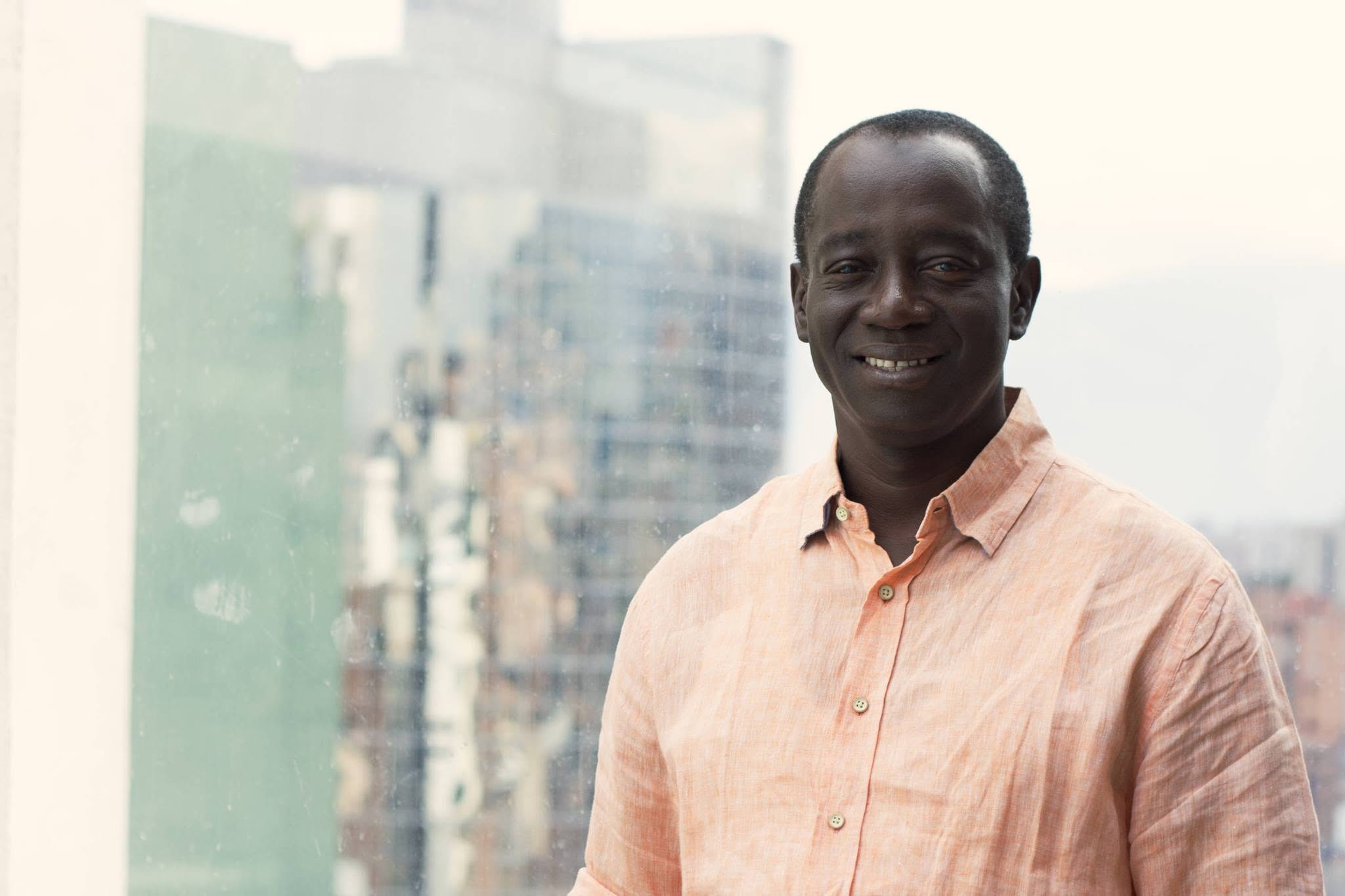
By Oumar Farouk Sesay
Only amateurs wait until election day to rig an election.
By then, ballots are being watched, observers are present, citizens are alert, and political positions have hardened. The more sophisticated contest begins much earlier—when the rules are written, institutions are positioned, and the electoral terrain itself begins to shift.
That is why Sierra Leone’s current constitutional debate matters far beyond Parliament. If the rules governing future presidential elections, electoral thresholds, and political geography are being altered now, the 2028 election may already be underway.
The question is no longer simply who will count the votes.
It is who will define the conditions under which those votes will matter.
Sierra Leone should recognize the danger. The disputed 2023 election left behind something more enduring than competing claims of victory and defeat: a deficit of trust. Whatever one’s partisan interpretation of that election, questions about electoral administration, institutional credibility and avenues for redress entered deeply into the national conversation.
That makes every subsequent change to the architecture of elections more sensitive.
The appropriate response to a deficit of trust is to rebuild confidence. Yet constitutional reform now risks becoming another arena where mistrust is reproduced.
The Constitution can and should be amended when circumstances require it. No serious constitutionalist believes a national charter must remain unchanged forever. Societies change. Institutions evolve. Experience reveals weaknesses that earlier generations could not have anticipated.
But the need for reform is not the same as the legitimacy of every reform.
And a worthy amendment does not excuse an unconvincing process.
Section 108 of the 1991 Constitution deliberately makes constitutional change more difficult than ordinary legislation. Whatever interpretation ultimately prevails on the precise voting arithmetic, the principle behind that higher threshold is difficult to miss: fundamental rules should require broader agreement than the temporary preferences of the government of the day.
That requirement is not an inconvenience accidentally left behind by the framers.
The inconvenience is the safeguard.
A Constitution matters precisely because it places some decisions beyond the easy reach of ordinary political majorities. Governments are elected to govern, but they are not elected to treat the constitutional rules of political competition as ordinary administrative property.
This debate, therefore, should not be reduced to whether one supports proportional representation, changes to presidential thresholds, geographic-spread requirements, or any single proposed provision.
The deeper question is what all these changes could mean when considered together.
Electoral systems do more than produce winners.
They shape the behaviour required to win.
For much of Sierra Leone’s democratic experience, a party seeking national power has had reason to look beyond its strongest regional constituencies. That incentive has value in a country where electoral allegiance has too often overlapped with ethnicity and region.
A presidential candidate should have reason to enter unfriendly territory.
To persuade sceptical communities.
To build alliances beyond familiar strongholds.
To understand that Sierra Leone cannot be sustainably governed as a federation of partisan enclaves.
This is why changes affecting presidential thresholds, proportional representation, and geographic spread deserve to be examined not merely clause by clause but as parts of a single electoral architecture.
And that is where political geography becomes especially important.
Administrative districts are not merely lines on a map once electoral law attaches political consequences to performance across districts.
A district may be created today in the language of administration and become an electoral variable tomorrow.
That does not mean every proposed district is an act of manipulation. New districts may have legitimate administrative justifications, including access to services and more effective local governance.
But where changes to district boundaries or numbers occur alongside reforms that give geographic spread greater electoral significance, citizens are entitled to ask how the two interact.
If victory depends partly on performance across a specified number of districts, then altering the number, location, or composition of those districts can change electoral arithmetic. At that point, the map itself becomes part of the contest.
A responsible government should therefore avoid not only actual manipulation of electoral geography but also situations in which reasonable citizens might suspect that the map and the rules are being redesigned in concert.
Constitutional legitimacy depends not only on good intentions.
It depends on public confidence.
The Constitution is a national cloth. It must not be cut and tailored so tightly around the government of the day that the rest of the country is left outside its protection.
That principle applies to every party.
Would those defending a constitutional arrangement today defend exactly the same arrangement if their opponents controlled the State House?
Would a power considered harmless under the SLPP remain harmless under the APC?
Would an interpretation applauded by the APC still appear constitutional if used by the SLPP?
That is one of the simplest tests of constitutional principle.
If our answer changes when government changes, what we are defending may not be principle at all. It may merely be advantage.
This is where Sierra Leone’s history should make us cautious.
The country has experienced periods when political advantage hardened into entitlement, institutions weakened, and public trust deteriorated. The civil war had many causes, and it would be irresponsible to suggest that constitutional abuse alone produced that catastrophe.
But it would be equally irresponsible to forget that the collapse of peace was preceded by a collapse of confidence in governance, accountability and institutions.
The war did not begin simply when the first weapon was fired.
Long before that, the relationship between citizen and state had been wounded.
The lesson is not that history must repeat itself.
The lesson is that institutional decay rarely announces the consequences it is preparing.
Constitutions, too, are rarely weakened only through dramatic rupture.
Sometimes erosion occurs quietly: an interpretation is stretched here, a safeguard becomes flexible there, an exception is justified by necessity, and a precedent born of political convenience slowly acquires the status of normality. The democratic shell survives.
The restraint inside it grows thinner.
That is why this moment requires constitutional restraint from both the government and the opposition.
The government should not treat parliamentary strength as a substitute for national consent to changes that affect the rules of political competition. Good proposals should survive scrutiny.
Bad proposals should fail it.
But the process must inspire enough confidence that citizens can distinguish constitutional reform from partisan redesign.
If a reform is genuinely in the national interest, persuading the country should be seen as part of the reform—not an obstacle to it.
The same principle applies when disputes reach the Supreme Court.
The Court would not merely settle a disagreement over words or parliamentary arithmetic. It would be interpreting constitutional boundaries at a moment when institutional confidence is itself part of the national problem.
Its most valuable contribution would therefore be reasoning that is clear, principled, and capable of surviving a change of government. The same test applies to Parliament and to the Executive.
The question is larger than the political fortunes of any one administration. It concerns the democratic culture we intend to leave behind. Governments naturally think about the next election. Constitutions are supposed to think beyond it. That is the distinction Sierra Leone must preserve.
A governing party may sincerely believe a reform will improve the country. But constitutional design requires more than sincerity. It requires imagining the same law in the hands of people one does not trust.
That is the discipline of constitutionalism.
A power that seems harmless in friendly hands may look very different after political power changes hands.
A district structure that appears administratively sensible today may acquire different meaning when attached to tomorrow’s electoral formula.
A procedural shortcut justified by urgency now may become precedent later.
Laws outlive the politicians who make them.
That is why there are moments in national life when the most important political question is not, Can we do this? It is, Should we?
Restraint is not weakness when the Constitution is at stake.
It is democratic maturity.
Sierra Leone has traveled too far, suffered too much, and invested too heavily in constitutional government to be casual about the rules that hold the Republic together.
There is nothing inevitable about constitutional crisis.
Nothing inevitable about democratic decline.
Nothing inevitable about another breakdown of trust.
But avoiding those outcomes requires recognising danger while it is still only a possibility.
The greatest danger to the next election may therefore not arrive on election day.
By then, the decisive work may already have been done.
The rules may have been rewritten. The geography may have shifted. Institutions may have been weakened, distrusted, or drawn into the contest. Citizens may arrive at the polling station believing they are beginning the election, when, in fact, much of the struggle over its conditions occurred years earlier.
That is why constitutional vigilance matters now.
The question is not whether Sierra Leone can reform its electoral system. It can.
The question is whether the rules being established today would still seem fair if, tomorrow, they were enforced by the individuals we currently oppose.
That is the test.
Because only amateurs wait until election day.
The professionals begin with the rules today.