
By: Edward Dictionary Caulker
One of the most overlooked aspects of constitutional reform is that it did not begin with President Bio, nor is it likely to end with him.
Successive administrations, constitutional review committees, civil society organisations, legal experts, and governance institutions have repeatedly highlighted weaknesses within the 1991 Constitution. As revealed by the several hours spent by Parliamentarians debating on the bill it shows constitutional reform is a sensitive conversations any democracy can undertake. It touches the foundations of governance, defines relationships between citizens and the State, and shapes how political power is acquired, exercised, and transferred.
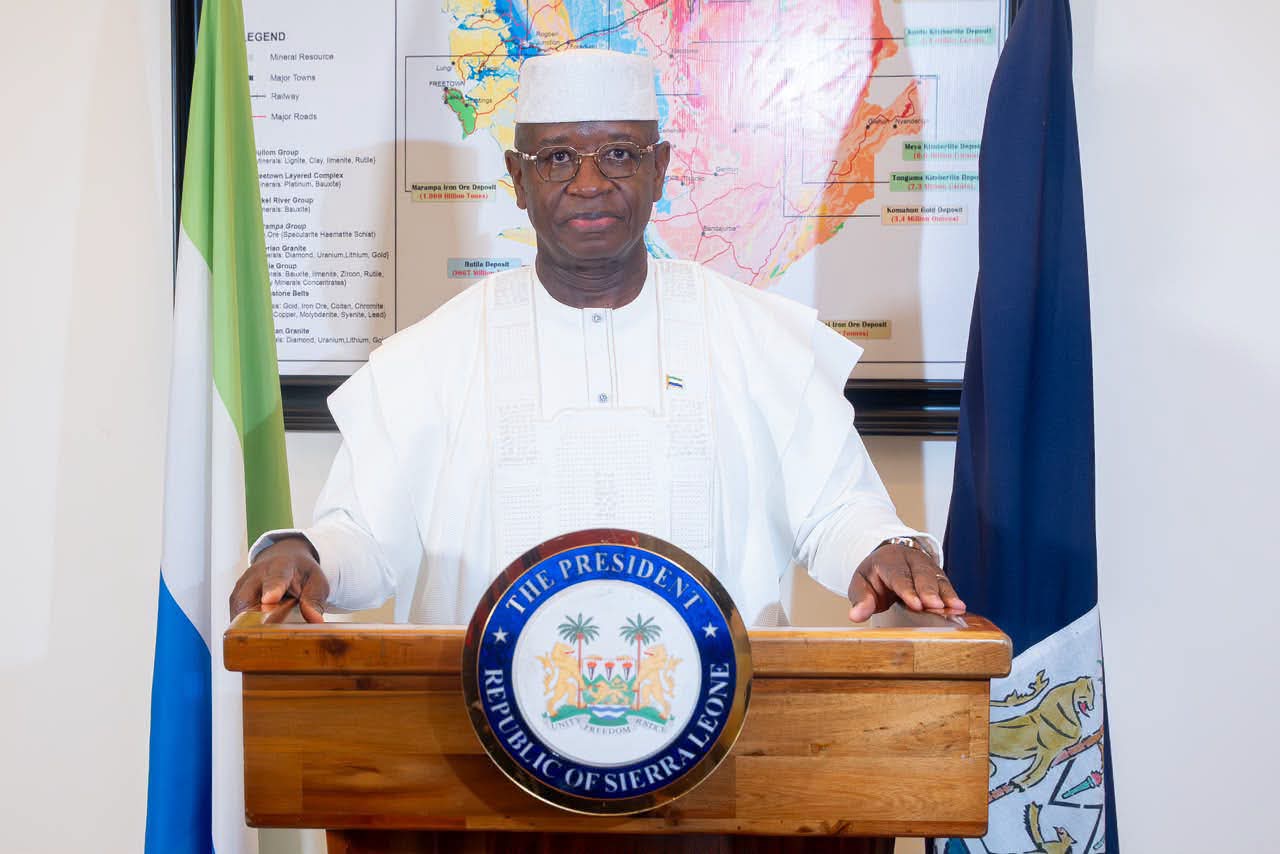
Consequently, when President Julius Maada Bio addressed the nation ahead of Parliament’s vote on the Constitution of Sierra Leone (Amendment) Bill, 2025, he was not merely speaking about legal amendments. He was speaking about the future direction of Sierra Leone’s democracy.
At the heart of the President’s address was a statement that deserves careful reflection: “The Constitution is not designed for one political party.” That assertion may appear simple, yet it speaks directly to one of the most enduring challenges facing emerging democracies the temptation to view constitutional change through a partisan lens rather than a national one.
For many Sierra Leoneans, constitutional reform is often viewed through the prism of political competition. Supporters tend to see reforms as beneficial when their preferred party is in power, while opponents frequently suspect hidden political motives. However, constitutions are intended to outlive governments, political parties, and individual leaders. Their true purpose is to provide stability, certainty, and fairness regardless of who occupies State House.
Even after the civil war, the Truth and Reconciliation Commission highlighted governance weaknesses and recommended reforms aimed at strengthening democracy, accountability, participation, and national cohesion.
Subsequent constitutional review processes reached similar conclusions.
Therefore, whether one supports or opposes specific amendments, it would be historically inaccurate to portray constitutional reform as an entirely new political project.
Rather, it is part of a national conversation that has continued across multiple governments and political eras.
That historical context matters because it shifts attention away from personalities and towards institutions.
Governments come and go. Constitutions remain.
President Bio’s address attempted to place the proposed reforms within that broader democratic context. Throughout his remarks, he argued that constitutional and electoral reforms should not be delayed until election periods are imminent. His reasoning was that rules governing elections should be settled long before campaigns begin, thereby reducing uncertainty and strengthening public confidence in democratic processes.
This argument is not without merit.
Across Africa and beyond, election-related disputes often arise because legal and constitutional questions remain unresolved until political tensions are already high. When reforms are introduced too close to elections, they can create suspicion, deepen political divisions, and undermine public trust. Therefore, the principle of undertaking reforms well ahead of electoral contests aligns with international democratic norms and established best practices.
Nevertheless, timing alone does not determine legitimacy.
Equally important is the process through which reforms are developed, debated, and adopted. Citizens naturally expect constitutional amendments to emerge from broad consultation, inclusive dialogue, and transparent engagement with all relevant stakeholders. Constitutional legitimacy is strengthened not merely by parliamentary approval but also by public confidence that diverse voices have been heard and respected throughout the process.
One notable aspect of the President’s address was its effort to situate constitutional reform within Sierra Leone’s historical journey. The speech reflected on constitutional evolution from independence through different political eras, reminding citizens that constitutional development is not a static event but an ongoing process. Such historical context is important because it reinforces the reality that constitutions must evolve alongside changing political, social, and economic realities.
No constitution remains permanently perfect.
Societies change. Technologies evolve. Governance challenges emerge. Demographic pressures increase. Institutions mature. Consequently, constitutional systems occasionally require adjustments to remain effective and responsive to contemporary realities. The critical question is not whether reform should occur, but whether reforms enhance democratic accountability, strengthen institutions, protect rights, and promote national cohesion.
That is where public scrutiny becomes essential.
While supporters of the amendment bill may argue that reforms are necessary to modernize governance and improve electoral administration, critics will inevitably ask whether every proposed change genuinely serves the national interest. Such questions are neither unreasonable nor obstructive. In fact, they are central to democratic accountability. Healthy democracies depend upon robust debate, especially when foundational legal frameworks are being reconsidered.
Beyond political calculations, the President’s address also raises broader questions about democratic maturity in Sierra Leone.
Can constitutional discussions rise above partisan interests?
Can competing political actors evaluate reforms based on their long-term national implications rather than immediate electoral advantages?
Can citizens engage constitutional questions not as supporters of political parties but as stakeholders in a democratic system that must serve future generations?
These questions matter because constitutional reform ultimately tests the strength of democratic culture. Strong democracies are not defined by the absence of disagreement. Rather, they are defined by their ability to manage disagreement through institutions, dialogue, and respect for constitutional processes.
Another important theme emerging from the President’s address was the emphasis on inclusion. By stating that the Constitution must reflect the aspirations, rights, hopes, and dreams of all citizens, the President acknowledged a fundamental democratic principle: constitutional governance must serve the entire nation rather than any particular political constituency.
That principle is particularly significant in a country where political competition remains highly polarized. In such environments, constitutional debates can easily become political battlegrounds. Yet constitutional reform succeeds only when citizens believe that outcomes will benefit the nation regardless of electoral outcomes.
For Parliament, therefore, the responsibility extends beyond voting for or against specific provisions. Members of Parliament carry the responsibility of ensuring that constitutional amendments strengthen democratic governance, reinforce public trust, and enhance institutional credibility. Their decisions will inevitably influence how future generations view this period in Sierra Leone’s democratic development.
For citizens, the challenge is equally important.
Constitutional issues often appear technical and distant from everyday concerns. However, constitutional provisions directly influence electoral systems, political representation, accountability mechanisms, governance structures, and individual rights. Therefore, public engagement in constitutional discussions is not merely desirable it is essential.
As Sierra Leone continues navigating its democratic journey, constitutional reform must remain guided by principles rather than personalities, institutions rather than individuals, and national interests rather than partisan advantage. Any reform process that fails to command broad public confidence risks deepening political divisions rather than strengthening democratic stability.
Ultimately, President Bio’s address invites a larger national conversation about the kind of democracy Sierra Leone wishes to build. It challenges both supporters and critics to move beyond immediate political calculations and consider the long-term health of democratic institutions.
Whether one agrees with every aspect of the proposed reforms or not, one principle remains difficult to dispute: constitutions should never belong to governments, political parties, or temporary holders of power. They belong to citizens.
And perhaps that is the most important takeaway from this moment.
A constitution designed for one political party is a political instrument. A constitution designed for all citizens is a democratic covenant. Sierra Leone’s democratic future may well depend on ensuring that distinction is never forgotten.